Xinjiang ground jay: A desert corvid found nowhere else on Earth
- Nature Conservation
- Land Conservation
- Iconic Species
- Wildlife
- Birds
- East Asian Deserts
- Eastern Eurasia Realm

One Earth’s “Species of the Week” series highlights iconic species that represent the unique biogeography of each of the 185 bioregions of the Earth.
Small, elusive, and perfectly adapted to life on the desert floor, the Xinjiang ground jay (Podoces biddulphi) is one of the world’s most geographically restricted birds.
Endemic to the arid landscapes of Xinjiang, this unusual member of the crow family moves more like a runner than a flier, chasing prey across open ground and perching on sparse vantage points. With a limited range and a small population, its survival is closely tied to the fragile desert oases it calls home.

In the One Earth Bioregions Framework, the Xinjiang ground jay is the iconic species of the Taklimakan Desert & Lowland Forests bioregion (PA39), located in the East Asian Deserts subrealm of Eastern Eurasia.
A bird shaped by deserts and oases
The Xinjiang ground jay inhabits dry, open areas and expansive scrub landscapes. These environments are defined by sparse vegetation, wide horizons, and isolated oases that provide critical nesting and foraging sites.
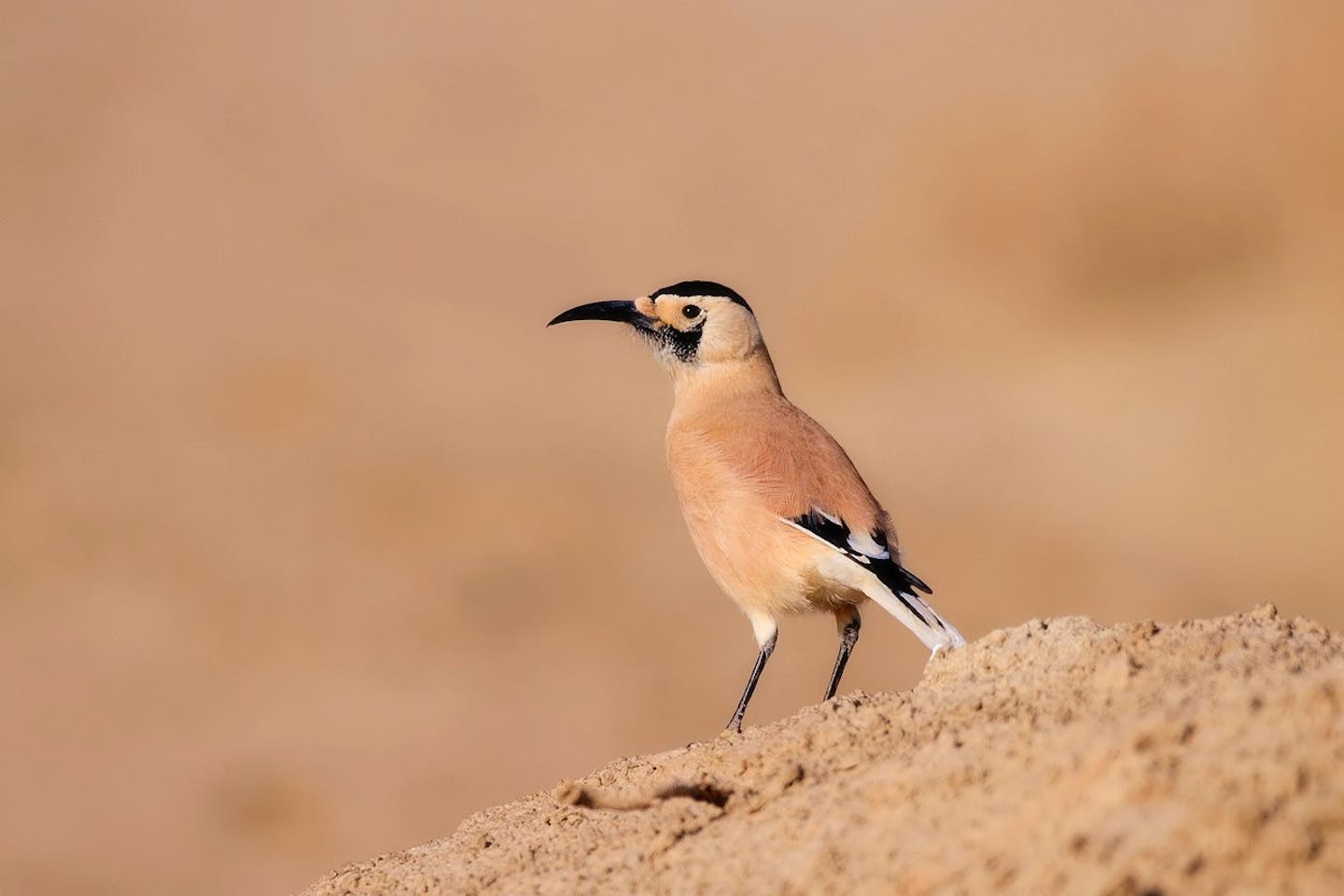
Within this harsh setting, the bird is often seen perched on posts, snags, or other elevated lookouts, scanning the ground below before darting off in pursuit of prey. While it may venture near human-influenced areas such as highways, it generally avoids nesting close to them.
Small stature and distinctive desert camouflage
Not larger than an adult human’s hand, the Xinjiang ground jay has a pale brownish-white coat of feathers that blends seamlessly with sandy terrain. Its plumage is beige overall, with partly black and white wings and a black cap.
A sharp beak curves downward, and a thick black mustache sweeps upward toward the face, giving the bird a striking and memorable profile. Males and females differ in size, with males being larger.
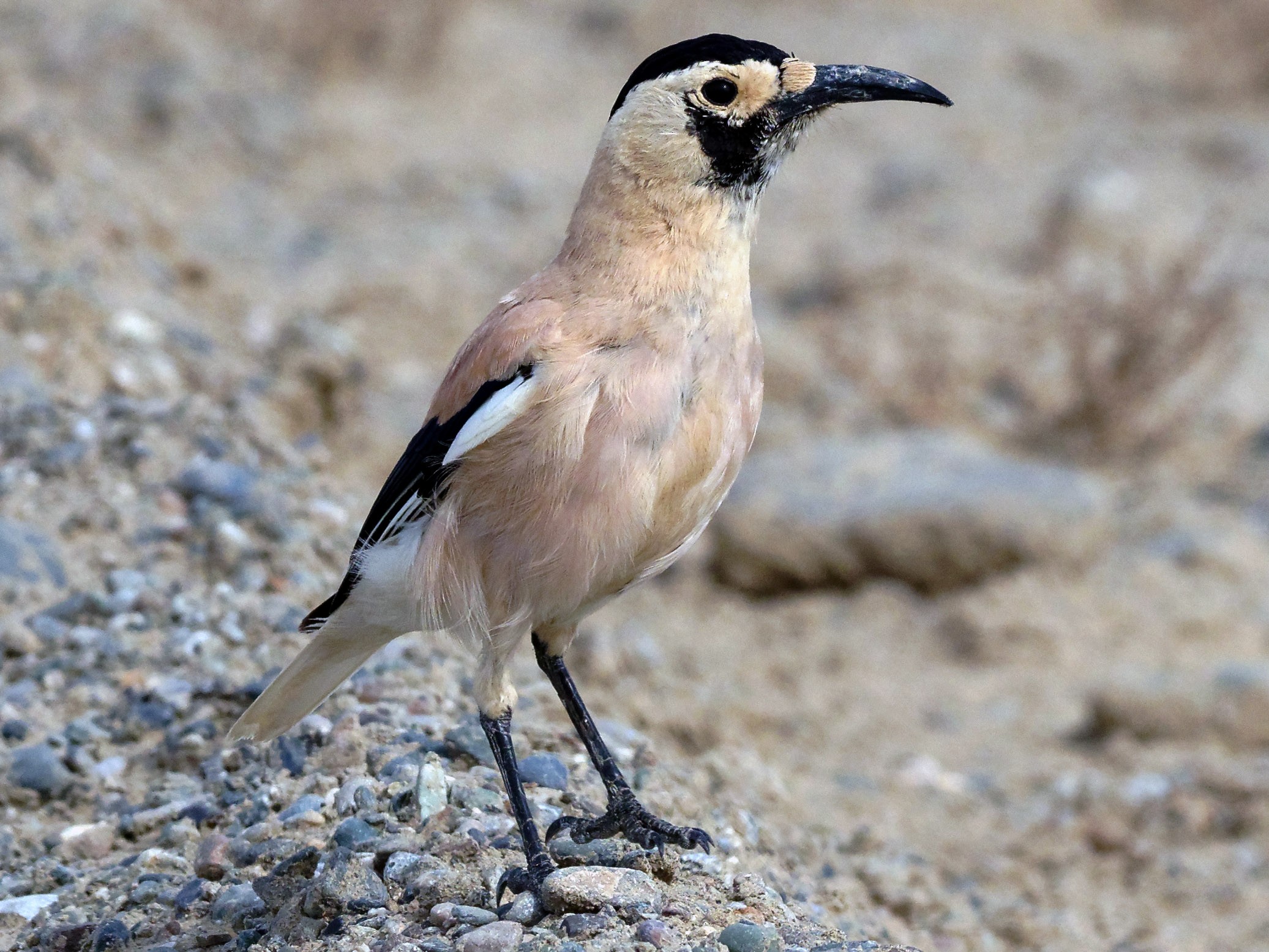
No larger than an adult human’s hand, the Xinjiang ground jay has beige plumage, black and white wings, and a distinctive black mustache. Image Credit: © Vincent Wang, eBird.
Keeping desert ecosystems in balance with its diet
This ground jay feeds mostly on insects, including bugs. It runs swiftly across the ground, actively chasing down invertebrates and occasionally reptiles, relying on speed and agility rather than aerial pursuit.
By feeding on insects and other small ground-dwelling animals, the Xinjiang ground jay helps regulate invertebrate populations within its desert habitat. Its foraging behavior links the health of scrub ecosystems and oases, making it a small but important participant in local ecological balance.
Monogamy and careful nesting
The breeding season runs from March to May. Xinjiang ground jays are monogamous, and both parents share feeding duties.
Females lay clutches of one to three eggs in open nests, often located toward the center of oases. Incubation lasts about 18 days. Females mainly incubate in the morning, increasing incubation time when temperatures are low and shading the eggs when temperatures are high to protect them from heat.
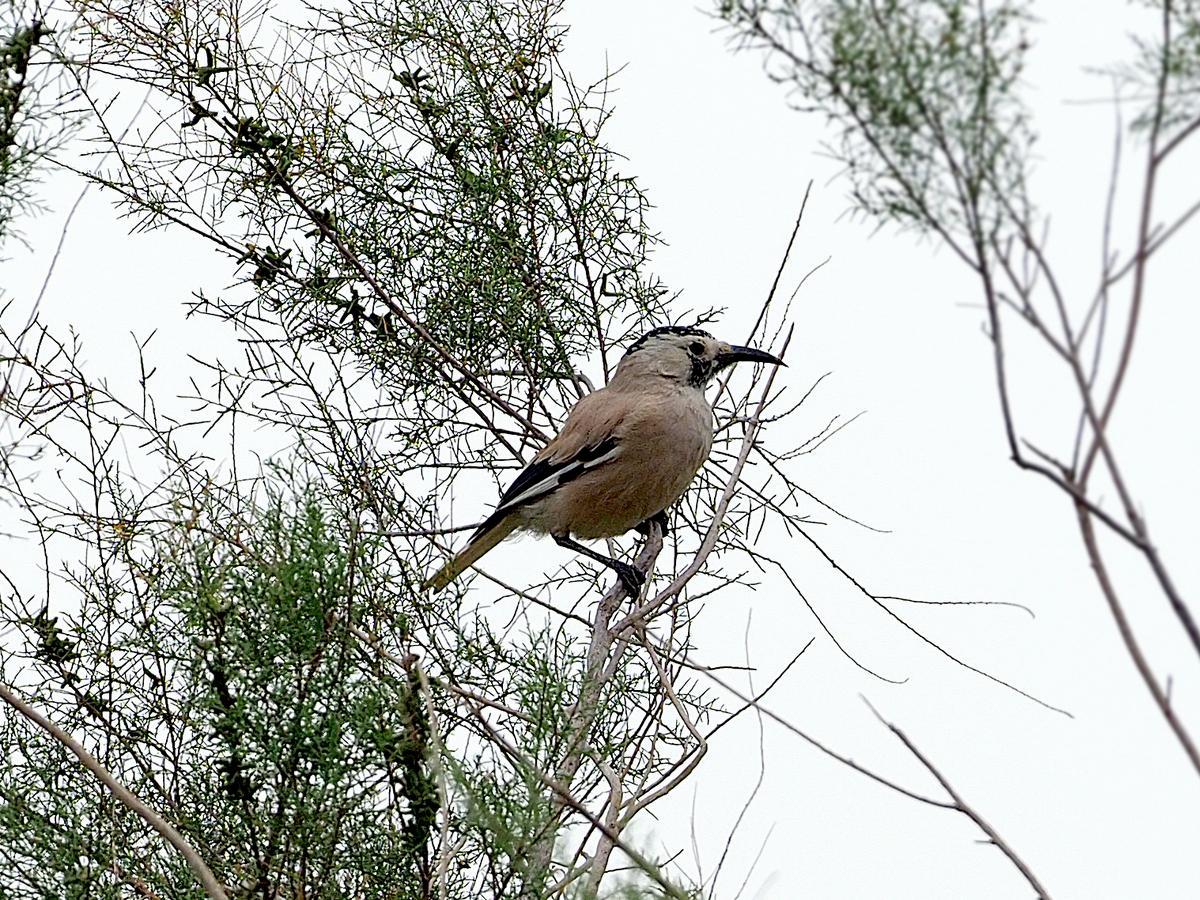
The Xinjiang ground jay scans for prey from twigs and low bushes, then runs swiftly across desert scrub to capture insects. Image Credit: James Eaton, Wiki Commons.
A shrinking habitat and conservation status
Habitat fragmentation and degradation pose the greatest threats to the Xinjiang ground jay. Its population is small, and its geographic range is limited, making it especially vulnerable to changes in land use and the loss of suitable desert and oasis environments.
Since 2004, the International Union for Conservation of Nature has listed the Xinjiang ground jay as Near Threatened. This status reflects its restricted range and ongoing habitat pressures. Protecting intact desert scrub and oasis systems remains essential to the future of this species.
A symbol of desert specialization
The Xinjiang ground jay is a reminder that some of the planet’s most remarkable birds thrive far from forests and wetlands. Perfectly tuned to life on the desert floor, it stands as a symbol of how specialized and fragile endemic species can be and why conserving even the quietest landscapes matters.
Explore similar content

Subscribe to receive monthly updates on climate solutions, environmental heroes, and the profound beauty and wonder of our shared planet Earth.
What is an Iconic Species?
An iconic species is a charismatic and ecologically significant animal selected to represent the unique biogeographical diversity of each bioregion in One Earth's Bioregions Framework. Learn more >