Meet the Baja California rock squirrel: A rare resident of Mexico’s desert mountains
- Nature Conservation
- Land Conservation
- Iconic Species
- Wildlife
- Mammals
- Mexican Drylands
- Northern America Realm

In the rocky deserts and mountain forests of Mexico’s Baja California Peninsula, a little-known squirrel survives in scattered pockets of habitat. With its bushy tail, mottled gray fur, and ability to navigate rugged terrain, the Baja California rock squirrel (Otospermophilus atricapillus) is uniquely adapted to the region’s arid landscapes.
Unlike squirrels commonly seen darting across parks and climbing backyard trees, this elusive rodent inhabits isolated areas where volcanic rock, desert vegetation, and scarce water sources shape its daily life. Yet despite its adaptations to this challenging environment, the Baja California rock squirrel faces an uncertain future. Classified as Endangered, it remains one of the region's least-studied mammals.
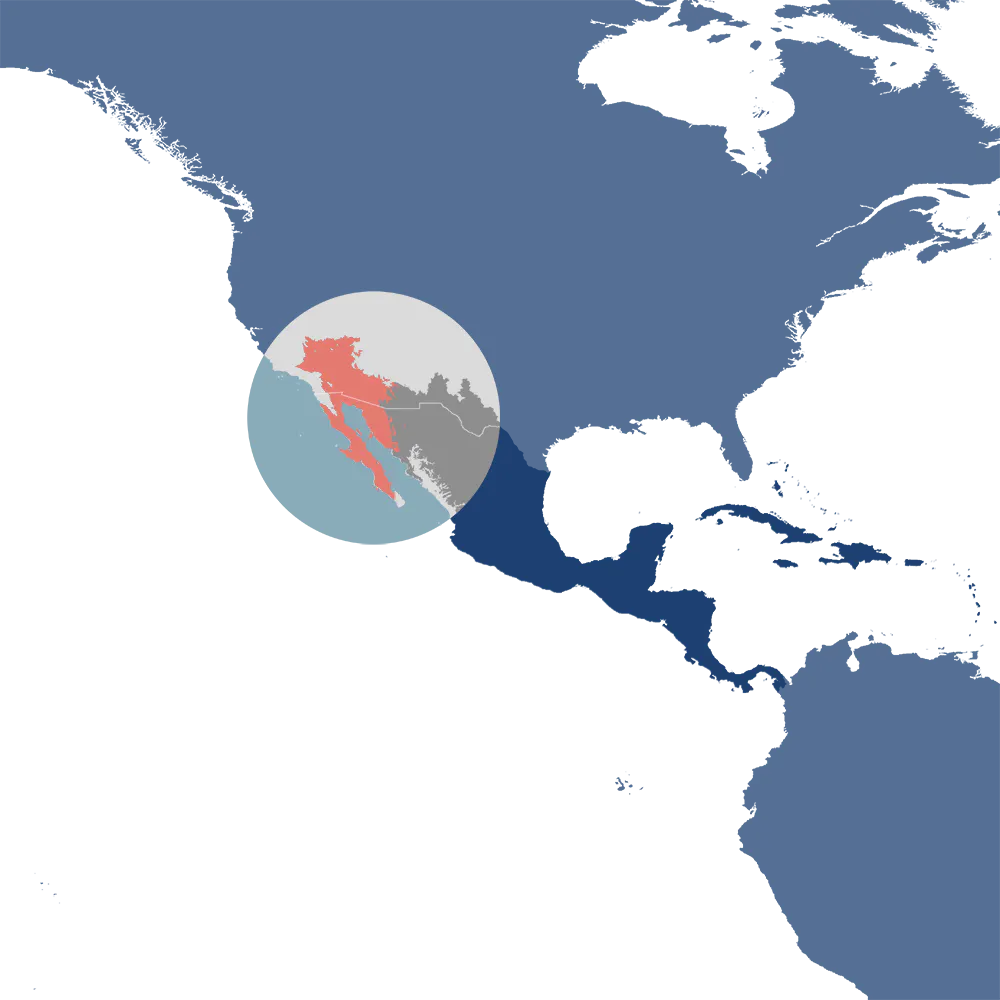
The Baja California rock squirrel is the iconic species of the Baja California bioregion (NA30), located within the Mexican Drylands subrealm of Northern America.
A home among volcanic rocks and desert forests
The Baja California rock squirrel is endemic to Mexico's Baja California Peninsula, where it inhabits desert shrublands and open mountain forests, particularly in areas of volcanic origin. Its habitat is characterized by rocky terrain and diverse desert vegetation, including towering cardon cacti, pitaya agria, pitaya dulce, cholla, mesquite, palo blanco, torote, and lomboy.
The species is primarily found near water holes in the Sierra de la Giganta and Sierra de San Francisco, where access to water and suitable vegetation helps determine where populations can survive. Because these habitats are limited and scattered across the region, squirrel populations are naturally isolated from one another, creating a fragmented distribution.
Mottled gray fur and a long, bushy tail
The Baja California rock squirrel is a relatively large ground squirrel, with males typically larger than females. Its gray fur features a mottled pattern that gives the animal a distinctive appearance, while a broad head, small rounded ears, and large eyes complete its features.
One of its most recognizable characteristics is its long, bushy tail, which helps the squirrel maintain balance while moving through rocky terrain and also plays a role in communication. Although closely related to the California ground squirrel (Otospermophilus beecheyi), the Baja California rock squirrel is distinguished by differences in coloration and genetic makeup.
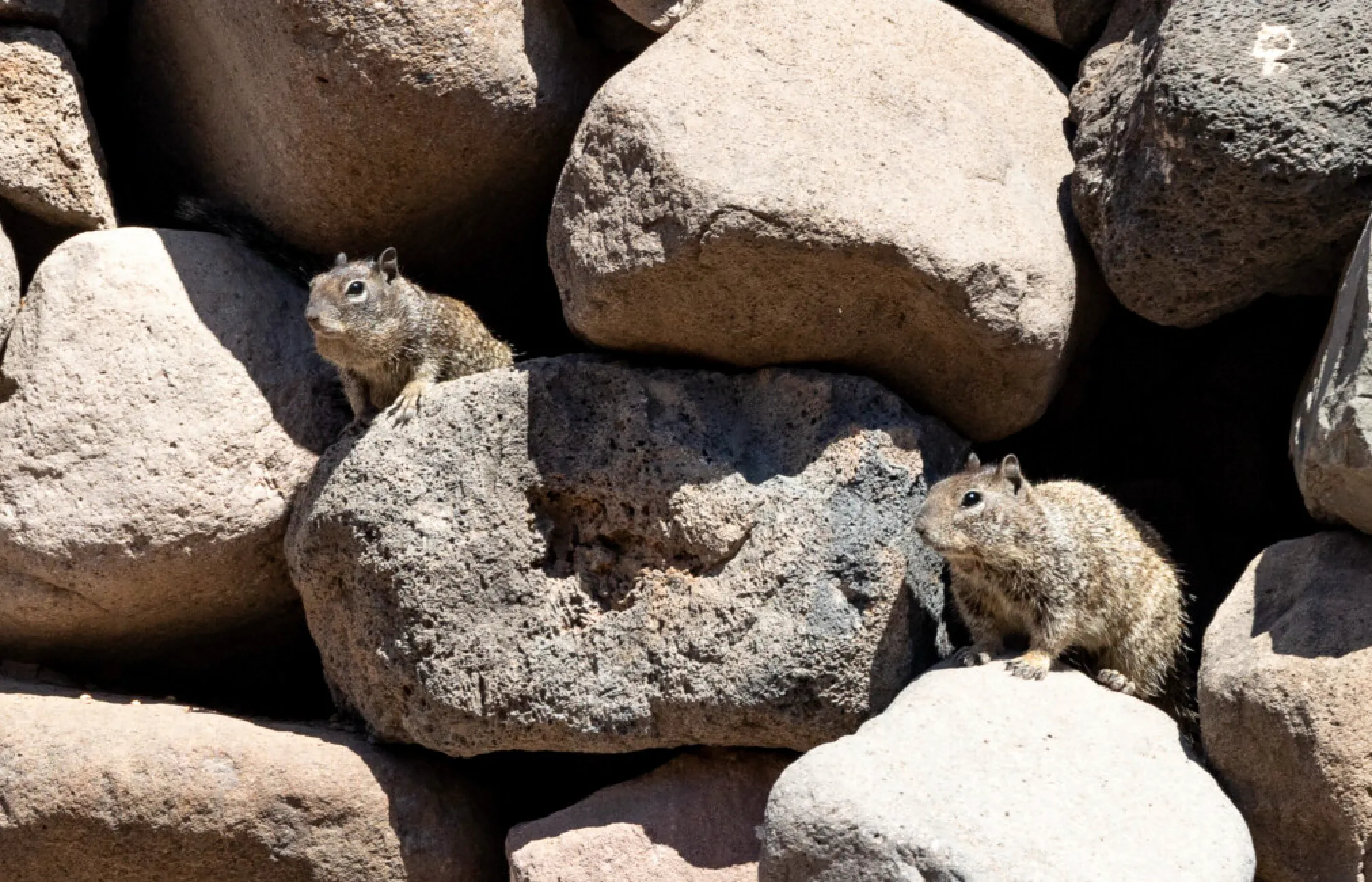
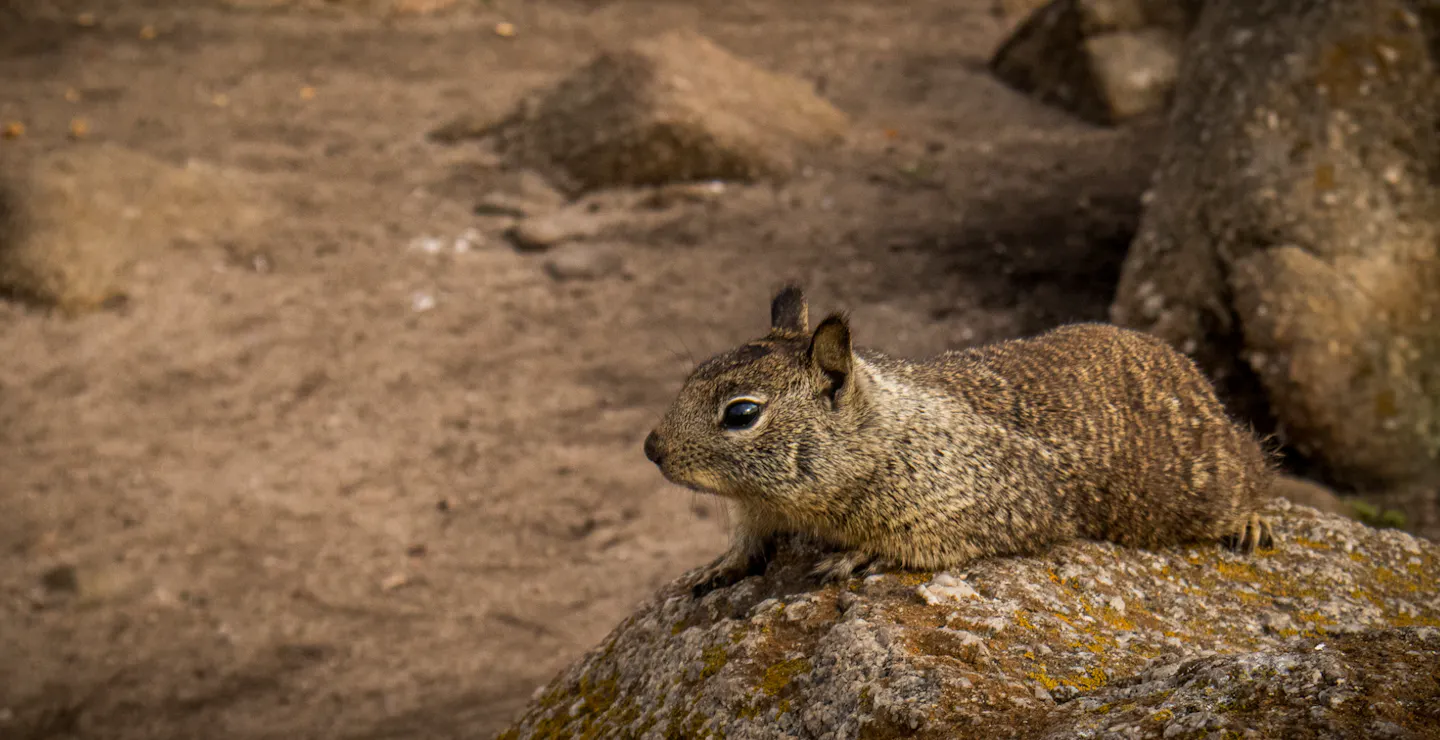
Baja California rock squirrels make their homes among rocky hillsides, using crevices, rock piles, and burrows for shelter and protection from predators. Image Credit: MammalWatching.com.
An adaptable diet of seeds, fruits, and more
The Baja California rock squirrel feeds on a varied diet of plant material found throughout its habitat. Its food sources include seeds and fruits from juniper, cactus, mesquite, agave, currants, grasses, and pine trees. It also consumes fruit from datil plants, an important food source in its native environment.
Although much of its diet consists of vegetation, the squirrel is not exclusively herbivorous. It also eats bird eggs and young birds when available, foraging both on the ground and among trees and shrubs.
Raising the next generation in sheltered burrows
Rock squirrels typically breed during the spring and summer months, with females producing one or two litters annually. After a gestation period of approximately 30 days, females give birth to an average of four to six young per litter.
Newborn squirrels are altricial, meaning they enter the world blind, hairless, and entirely dependent on their mothers. Over the following weeks, the young develop rapidly, with juveniles beginning to emerge from their burrows several weeks after birth.
While these reproductive characteristics are documented for rock squirrels generally, further research is needed to better understand the breeding patterns and survival rates of the Baja California rock squirrel specifically.
Habitat loss threatens an already fragmented population
The Baja California rock squirrel faces significant conservation challenges, largely because of its restricted geographic range. The species inhabits scattered pockets of suitable habitat, meaning populations are already isolated from one another. This limited distribution makes the animal particularly vulnerable to environmental changes.
Habitat degradation, land development, and agricultural expansion are among the primary threats to its survival. As human activities alter desert shrublands and mountain environments, the availability of suitable habitat may decline further, placing additional pressure on remaining populations.
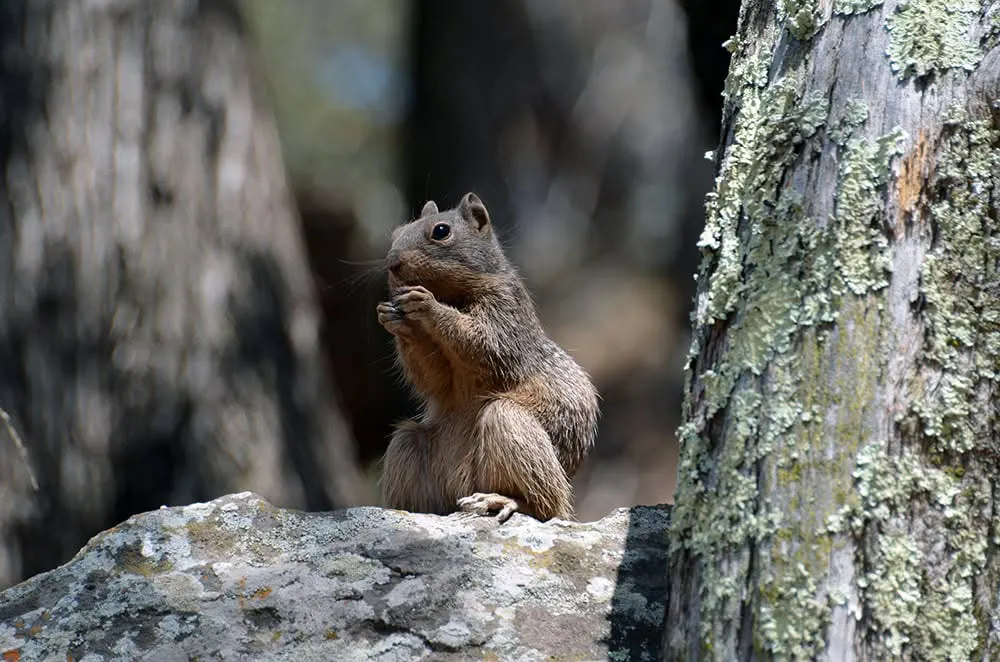
Found nowhere else on Earth, the Baja California rock squirrel is a symbol of the peninsula’s unique biodiversity and the importance of protecting its native wildlife. Image Credit: Kenneth Shirk.
An Endangered Species in need of greater protection
The Baja California rock squirrel is classified as Endangered on the International Union for Conservation of Nature (IUCN) Red List of Threatened Species. Its limited range, fragmented populations, and ongoing habitat degradation are central concerns for its long-term survival.
Although genetic research has helped establish the Baja California rock squirrel as a distinct species, conservation efforts remain limited. Further studies of its population trends, ecological requirements, and habitat preferences are needed to develop effective strategies to protect the species and its remaining habitat.
Protecting a little-known resident of Baja California
Among the volcanic hillsides, desert shrubs, and open forests of Baja California lives a squirrel whose future remains uncertain. Greater scientific attention and habitat protection could help ensure that this endangered mammal remains part of the peninsula's distinctive wildlife for generations to come.
Explore similar content

Subscribe to receive monthly updates on climate solutions, environmental heroes, and the profound beauty and wonder of our shared planet Earth.
What is an Iconic Species?
One Earth’s Species of the Week series highlights charismatic and ecologically significant animals that represent the diversity of each of our 185 bioregions. These iconic species are part of the One Earth Bioregions Framework. Learn more >wolf