Golden bandicoot: The small Australian marsupial fighting for survival

One Earth’s “Species of the Week” series highlights iconic species that represent the unique biogeography of each of the 185 bioregions of the Earth.
Once common across vast stretches of Australia, the golden bandicoot (Isoodon auratus) is now a quiet survivor, clinging to life in remote pockets of the continent and on offshore islands. Small, golden-furred, and nocturnal, this marsupial has endured dramatic population declines since European settlement, yet it remains one of Australia’s most ecologically important diggers. Its story is one of loss, resilience, and ongoing collaboration between science and Indigenous knowledge.

In the One Earth Bioregions Framework, the golden bandicoot is the iconic species of the North Australian Tropical Savannas bioregion (AU8), located in the Australasia subrealm of Australasia.
Life in Australia’s grasslands, woodlands, and deserts
The golden bandicoot lives in some of Australia’s most demanding environments. Historically, the species ranged across northern, central, and western Australia, extending into semi-arid deserts, tropical forests, and woodlands. Its former range included vast desert systems such as the Great Sandy, Gibson, Great Victoria, and Tanami deserts.
Today, the species is restricted to scattered locations in Western Australia and the Northern Territory. These include mainland sites in the Kimberley region, such as Prince Regent National Park, the Yampi Peninsula, and the Charnley River–Artesian Range Wildlife Sanctuary. Stable populations also persist on offshore islands, including Barrow, Middle, Augustus, and Marchinbar Islands, as well as Raragala and Guluwuru Islands in the Wessel Island chain.
Across these locations, golden bandicoots occupy spinifex and tussock grasslands, eucalypt woodlands, sandstone landscapes, coastal shrublands, and heath. On islands, they often live among hummock grassland and low shrubs, while mainland populations are typically found near rainforest margins and woodlands with sufficient ground cover.
Small size and specialized anatomy
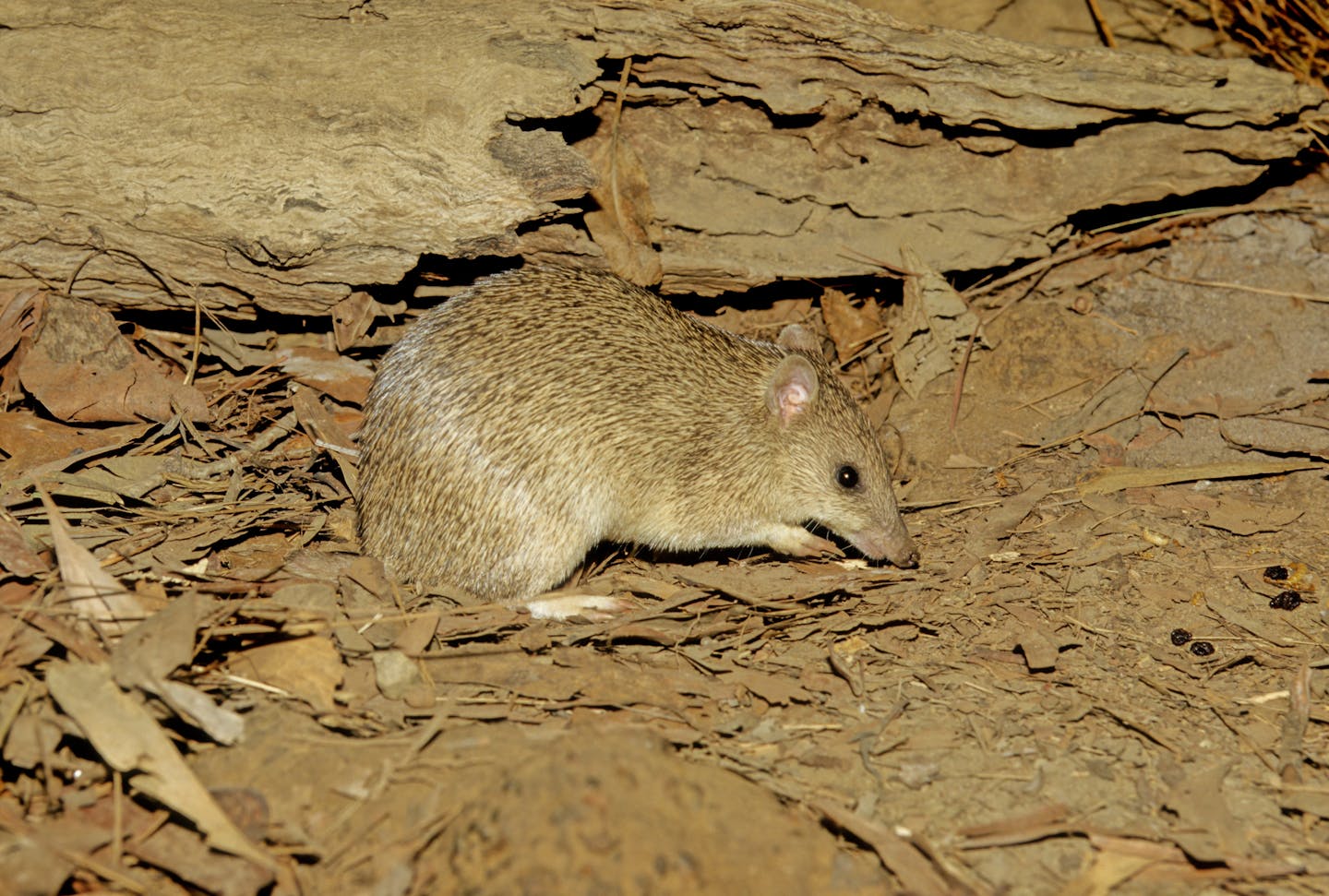
The golden bandicoot is the smallest member of the short-nosed bandicoot genus Isoodon. Adults average about 35 centimeters (14 in) from head to tail and weigh between 260 and 655 grams (9.2–23.1 oz), with most individuals closer to 310 grams (11 oz).
Its golden-brown back is streaked with black guard hairs, giving the animal its name and distinguishing it from larger brown bandicoots. The sides and face fade into a light rust color, while the underbelly is pale amber to soft gray. A long, flat, pointed nose helps it root through soil, and its compact, hunched posture and relatively long tail give it a rat-like silhouette.
Powerful hind limbs support digging and movement, while short forelimbs end in three clawed toes used to excavate shallow pits. Like many marsupials, it has fused toes on its hind feet that form a grooming comb. Females carry their young in a rear-opening pouch with eight teats.
An omnivorous diet fueled by digging
Golden bandicoots are omnivores with a diet shaped by scarcity. At night, they forage for insects, invertebrates, small reptiles, plant bulbs, roots, tubers, and succulents. Succulent plants are particularly important, providing much of the water they need in dry environments.
Their foraging behavior leaves behind small, conical diggings scattered across the landscape. These pits are a signature of bandicoot presence and a key reason the species is considered ecologically significant.
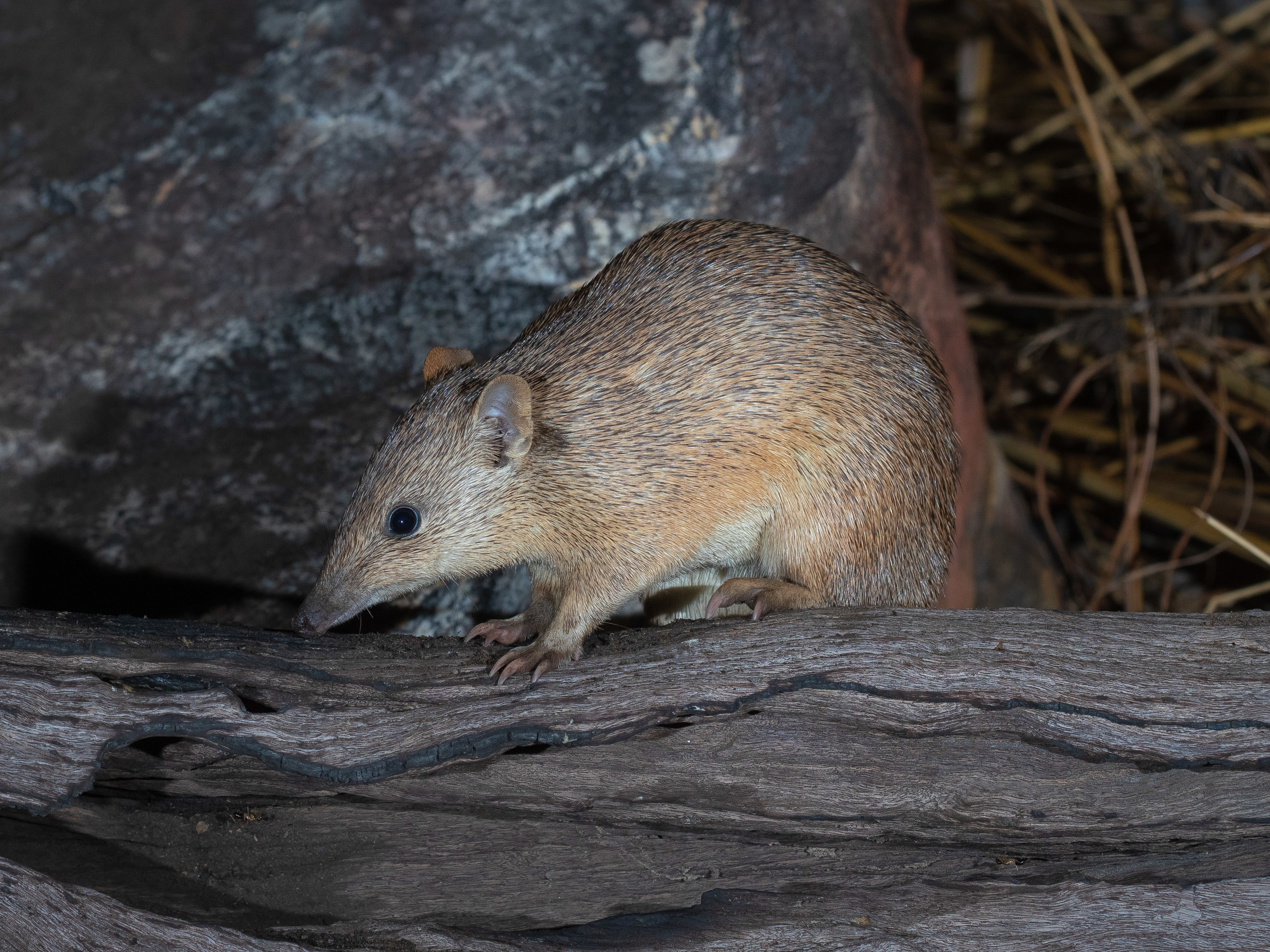
As with most bandicoots, the golden bandicoot has a long, flat, pointy nose. It is an omnivore, consuming succulents, insects, plant bulbs, and small reptiles. Image Credit: Brad Leue, AustralianWildlife.org.
Ecosystem engineers of Australia's ground layer
By digging thousands of small pits while searching for food, golden bandicoots play a vital role in ecosystem health. Their foraging aerates the soil, improves water infiltration, and helps redistribute nutrients. The disturbed soil creates microhabitats where seeds can germinate more easily, supporting plant regeneration.
In landscapes where golden bandicoots have disappeared, these soil processes are diminished. Their absence alters ground structure, plant growth, and nutrient cycling, showing how even a small mammal can shape an entire ecosystem.
Nocturnal behavior and survival strategies
Golden bandicoots are strictly nocturnal. During the day, they shelter in dense vegetation, hollow logs, or shallow burrows, building nests from grass, leaves, and sticks. At night, they move between clumps of grass and shrubs, relying on keen eyesight and a strong sense of smell to locate food in low light.
In extreme heat, they may burrow into the soil to stay cool. Physiologically, the species is well adapted to arid environments. It has a low and flexible body temperature, a low metabolic rate, and reduced water loss through evaporation. These traits allow it to survive in hot, dry conditions where water and shade are limited.
Rapid reproduction and short life cycle
Among marsupials, golden bandicoots have one of the highest reproductive rates. Breeding occurs throughout the year, with peaks during both the wet season and the dry season. Gestation lasts only about 12 days, one of the shortest known for mammals.
Females typically give birth to two or three young per litter. The tiny joeys remain in the pouch for up to eight weeks, after which parental care is minimal. This rapid reproduction helps populations recover quickly when conditions are favorable, particularly on predator-free islands.
Cultural significance in Indigenous Australian traditions
Known as Wan'kurra in the Yolngu language, the golden bandicoot holds cultural importance for Indigenous communities in northern Australia. Among the Gumatj people of Arnhem Land, the animal features prominently in ceremonial song cycles and traditional stories.
Historically, some Aboriginal people referred to the bandicoot as “old people’s food,” a reflection of its slow pace and ease of capture.
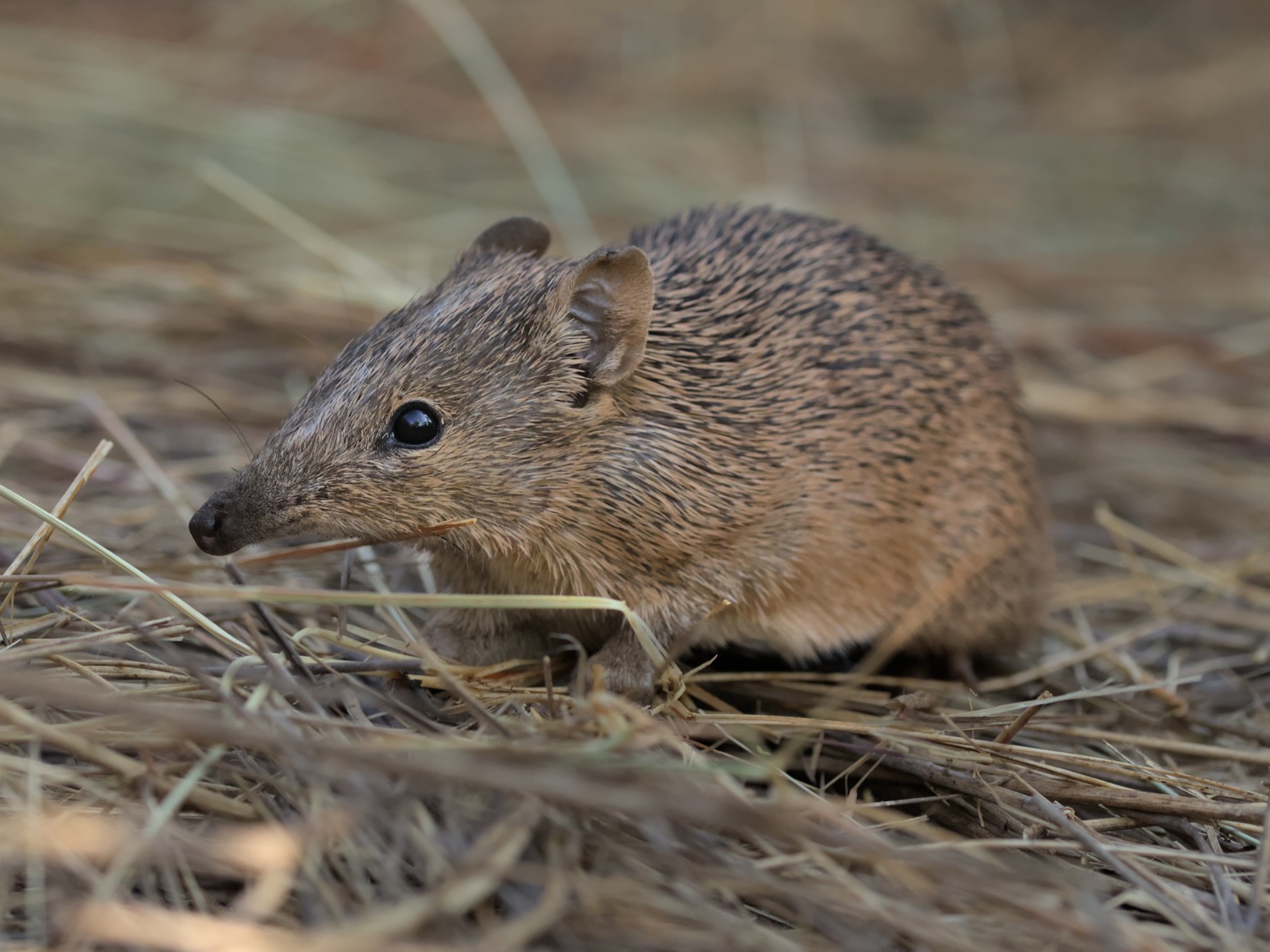
Large birds are the primary, natural predator of the golden bandicoot, but many predatory species have been introduced within its range. The greatest threat to the species has been, and remains, feral cats. Image Credit: Tom Sayers, AustralianWildlife.org.
Threats from new predators and wildfire
The decline of the golden bandicoot began rapidly after European settlement. Introduced predators have been the most significant threat. Feral cats remain the greatest danger, with European red foxes and feral dogs also contributing to population losses. On islands where cats were introduced, such as Hermite Island, golden bandicoots quickly became extinct.
Competition from introduced species has also played a role. Black rats once reduced island populations dramatically until eradication programs removed them in the early 1990s. Rabbits compete for food and alter vegetation structure, further stressing populations.
Habitat alteration is another major threat. Changes in fire regimes, particularly intense or poorly timed fires, reduce ground cover and make bandicoots more vulnerable to predators. While the species often prefers recently burned areas with fresh low vegetation, excessive or frequent fires can strip away critical shelter.
Conservation status and ongoing recovery efforts
The golden bandicoot is listed as Vulnerable on the IUCN Red List. The largest population, estimated at 20,000 individuals, lives on Barrow Island, which remains free of cats and foxes. Formal recovery plans ran from 2003 to 2015, focusing on monitoring populations, translocations, community engagement, and predator management.
In 2023, Indigenous ranger teams and conservation organizations worked together to survey and safely move golden bandicoots from the Kimberley to Newhaven Wildlife Sanctuary in central Australia. Ongoing efforts include keeping key islands cat-free, supporting traditional burning practices, monitoring populations, and investigating whether any individuals still survive in parts of Arnhem Land.
A small marsupial with a big role
The golden bandicoot may be small, but its impact on Australia’s landscapes is profound. Its survival now depends on continued predator control, careful fire management, and strong partnerships with Indigenous communities. In protecting this quiet digger, conservationists are also restoring the living processes that keep Australia’s arid and tropical ecosystems healthy.
Explore similar content

Subscribe to receive monthly updates on climate solutions, environmental heroes, and the profound beauty and wonder of our shared planet Earth.
What is an Iconic Species?
An iconic species is a charismatic and ecologically significant animal selected to represent the unique biogeographical diversity of each bioregion in One Earth's Bioregions Framework. Learn more >