Attwater’s prairie-chicken and the fight to restore Texas coastal prairies
- Nature Conservation
- Land Conservation
- Iconic Species
- Wildlife
- Birds
- Southeast US Savannas & Forests
- Northern America Realm

One Earth’s “Species of the Week” series highlights iconic species that represent the unique biogeography of each of the 185 bioregions of the Earth.
In the early 1900s, the deep, echoing call of the Attwater’s prairie-chicken carried across millions of acres of Gulf Coast grassland. Today, that sound has nearly vanished. Once numbering close to one million birds, this striking grouse now survives in only a few fragmented patches of Texas prairie, its fate tied to one of the most endangered ecosystems in North America.
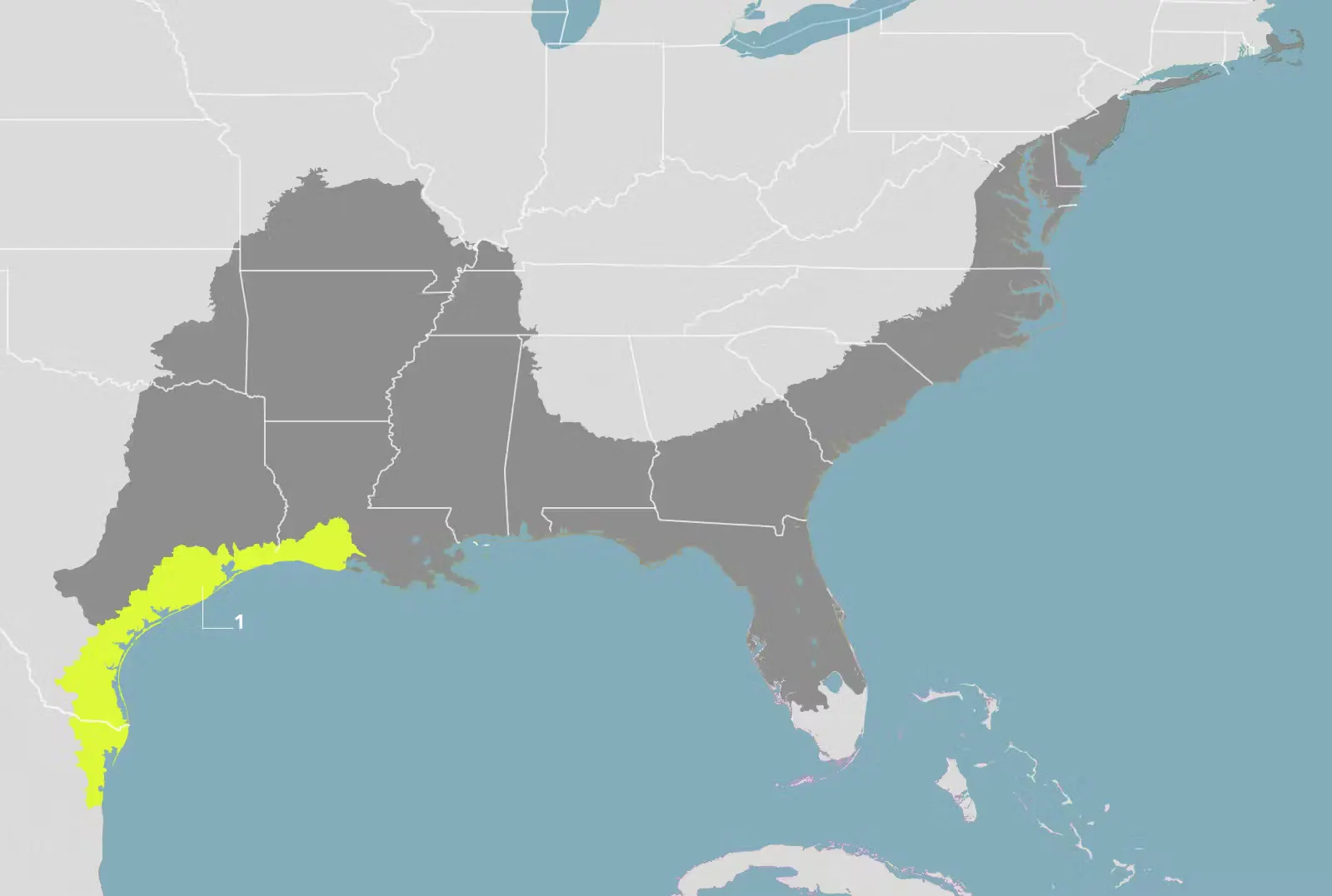
In the One Earth Bioregions Framework, the Attwater's prairie chicken is the iconic species of the Western Gulf Coastal Grasslands bioregion (NA27), located in the Southeast US Savannas & Forests subrealm of Northern America.
The last fragments of the Gulf Coast grasslands
The Attwater’s prairie-chicken (Tympanuchus cupido attwateri) is endemic to the coastal grasslands of Texas and once ranged into Louisiana, covering nearly 6 million acres from Bayou Teche to the Nueces River and inland for about 121 kilometers (75 miles). Named after naturalist Henry Philemon Attwater, who documented the region’s birdlife in the late 19th century, the species is deeply tied to this landscape.
These prairies were once shaped by grazing bison and periodic wildfires, creating a mosaic of grasses and flowering plants such as big bluestem, little bluestem, Indiangrass, and switchgrass.
Today, less than one percent of this habitat remains. What survives is fragmented into small patches, including the Attwater Prairie Chicken National Wildlife Refuge near Eagle Lake and private lands in Goliad County. Without large, connected grasslands, the species struggles to survive.
A grouse with striking patterns and booming displays
About the size of a football, the Attwater’s prairie-chicken measures 43 to 45.5 centimeters (17 to 18 inches) long, with a wingspan of about 70 centimeters (28 inches), and weighs 0.7 to 0.9 kilograms (1.5 to 2 pounds). Its body is marked by bold vertical bars of dark brown and buff-white.
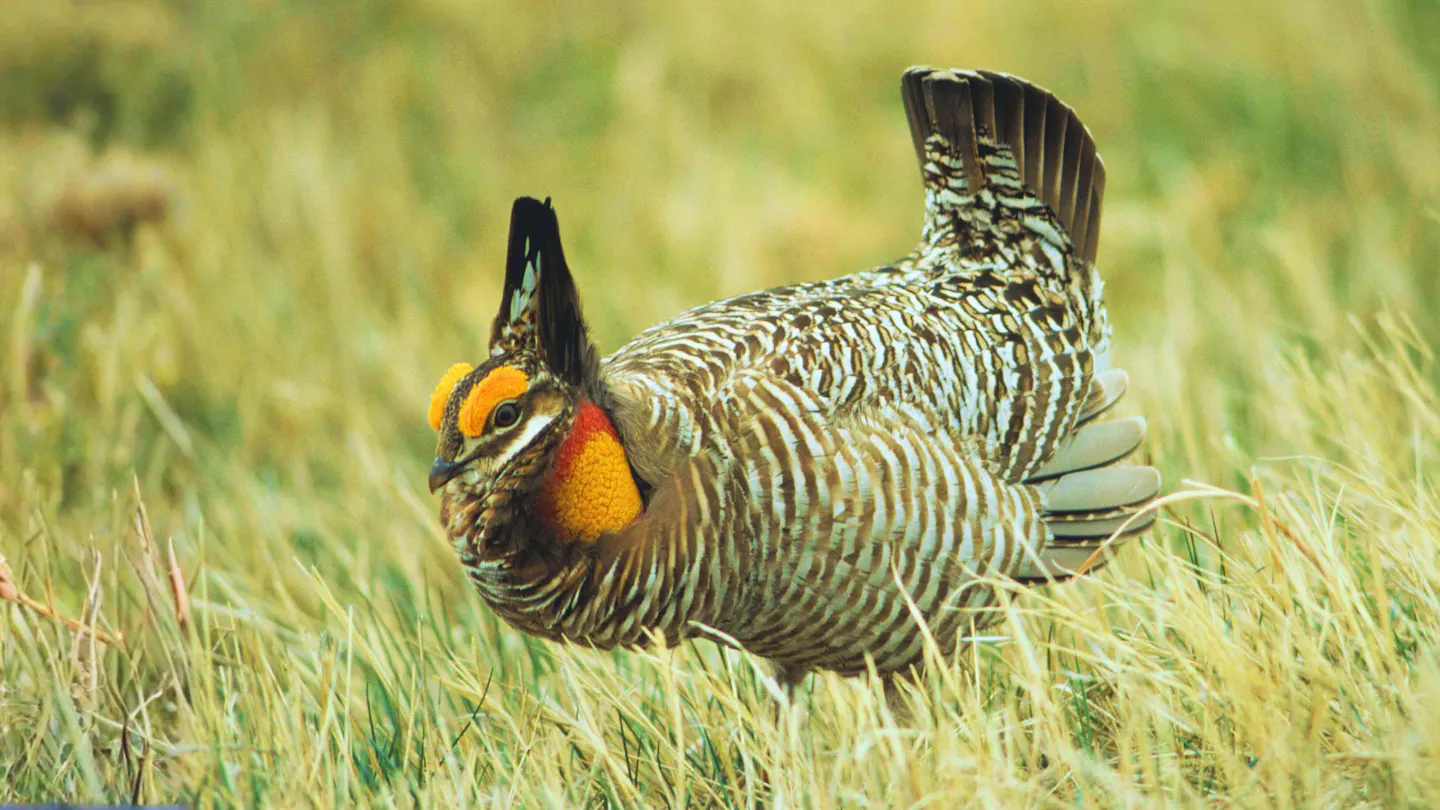
Males are especially distinctive. They possess elongated neck feathers called pinnae that rise like ears during displays, along with bright orange or golden air sacs on either side of the neck. When inflated, these sacs amplify a deep booming call that can travel long distances across the prairie.
The species typically lives between two and five years in the wild.
Feeding on prairie plants and insects
This bird has a varied diet that reflects the diversity of the prairie. Adults feed on grass shoots, seeds, flower petals, and buds, while chicks rely heavily on insects such as grasshoppers, beetles, and caterpillars.
As chicks grow and seasons change, their diet gradually shifts toward more seeds and vegetation. The availability of insects is critical for early survival, making changes to insect populations especially significant for the species.
A keystone presence in a disappearing ecosystem
The Attwater’s prairie-chicken is part of a complex grassland system where plants, insects, and animals are tightly connected. By feeding on seeds and insects, it helps regulate plant communities and insect populations, contributing to the overall balance of the prairie.
Its presence also reflects the health of the ecosystem itself. As the prairie declines, so too does the prairie-chicken, making it an indicator of broader environmental change.
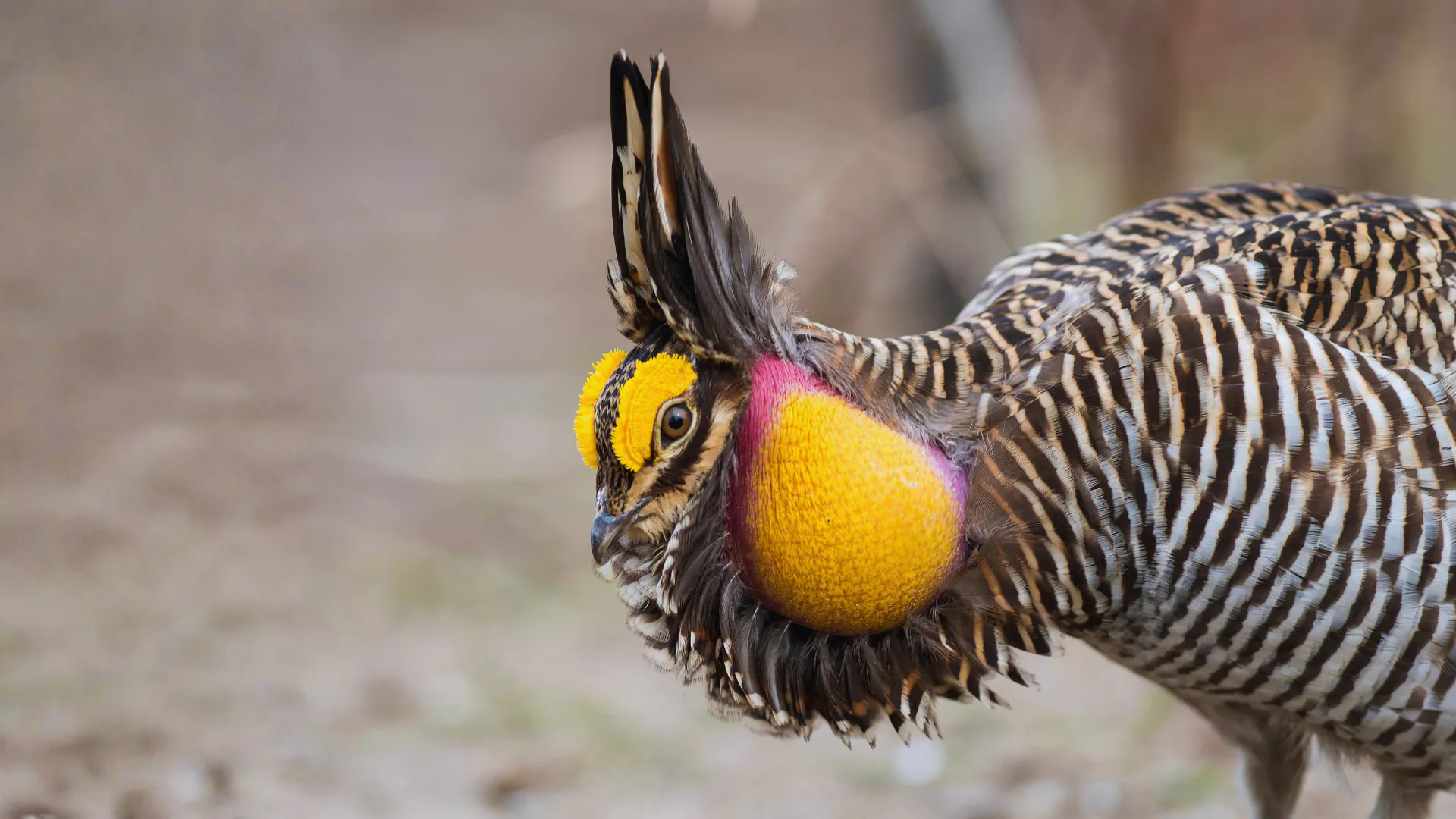
A booming and displaying Attwater’s prairie-chicken in the spring. Image Credit: Steve Oehlenschlager, Canva.
Life on the ground and the rhythm of the prairie
For most of the year, these birds live quietly among tall grasses, moving slowly and deliberately across the landscape. Though they spend much of their time on the ground, they are capable of flight, traveling several miles between feeding and roosting areas.
Each winter, beginning in late January, males gather in open areas known as booming grounds. Here, they perform elaborate displays, inflating their neck sacs, stamping their feet rapidly, and producing a low booming call. These displays can continue for hours each morning through May.
Courtship dances and fragile beginnings
From January through mid-May, courtship peaks as females visit booming grounds to choose a mate. The male’s display, complete with sound and movement, plays a central role in selection.
After mating, hens build nests on the ground, hidden in tall grass. They lay between 10 and 14 eggs, which hatch after about 26 days. Survival is uncertain. Only about three in ten eggs hatch successfully, and chicks remain with the hen for about six weeks. Heavy rains, flooding, and predators such as hawks, owls, coyotes, raccoons, skunks, opossums, and snakes all pose significant risks.
Decline driven by habitat loss and environmental change
The collapse of the Attwater’s prairie-chicken population is closely tied to the loss of coastal prairie habitat. Conversion to cropland, urban expansion, industrial development, and the planting of invasive species such as Chinese tallow trees have transformed the landscape.
Non-native grasses have created dense monocultures, replacing the diverse plant communities the birds depend on. Fire suppression has allowed brush to overtake open grasslands, making movement and nesting more difficult.
Other pressures compound the problem. Introduced red imported fire ants reduce insect populations, limiting food for chicks. Small population sizes increase vulnerability to disease, predators, and extreme weather events such as floods and hurricanes, which can wipe out entire generations.
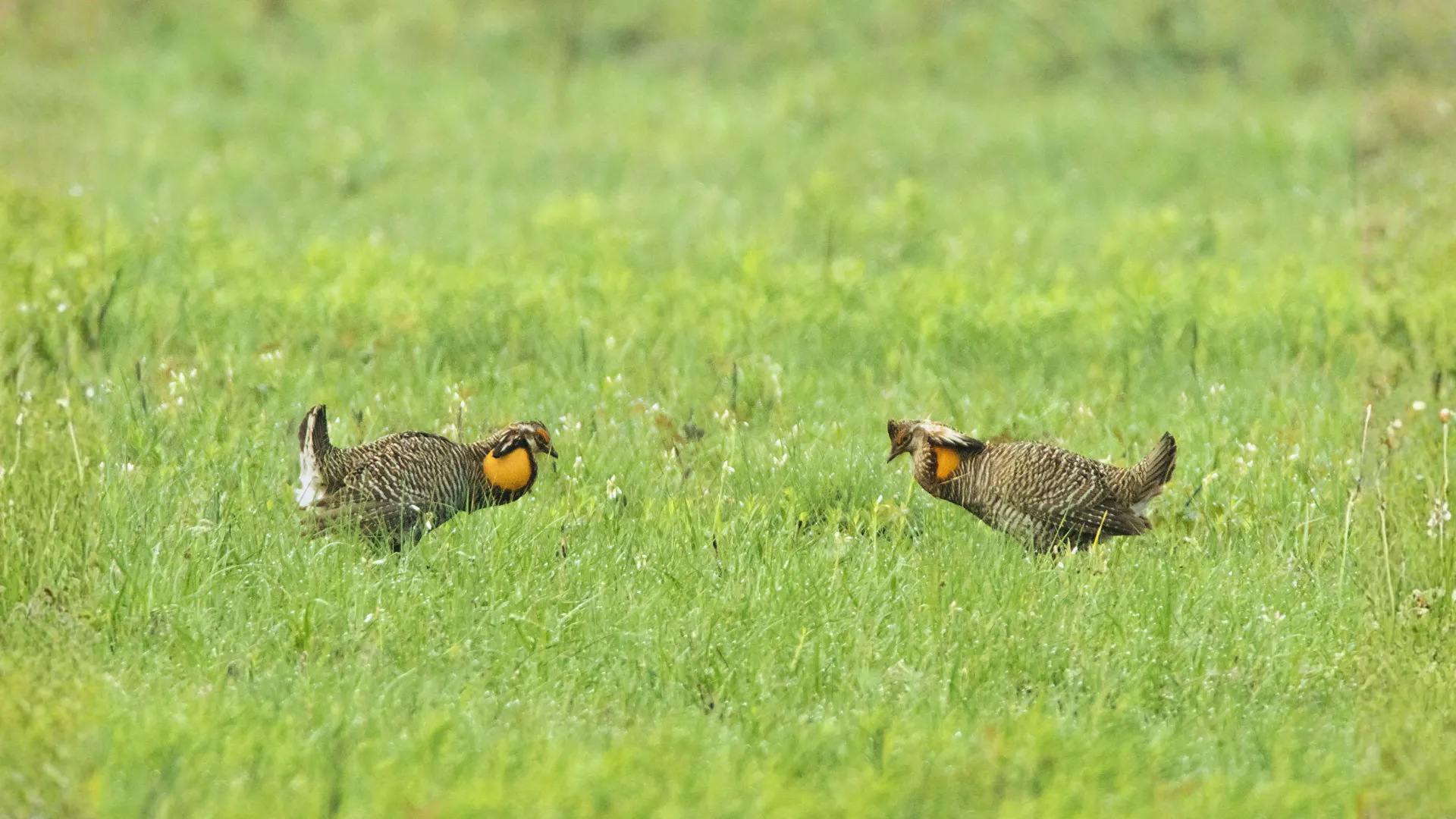
A pair of Attwater prairie-chickens face off in a mating display at the Attwater Prairie-Chicken National Wildlife Refuge near Eagle Lake, Texas. Image Credit: Milehightraveler, Canva.
A species on the brink and the efforts to bring it back
By 1937, only about 8,700 birds remained. When the species was listed as Endangered in 1967, that number had fallen to around 1,070. By 2003, fewer than 50 birds were left in the wild.
In recent years, numbers have fluctuated dramatically. Severe floods in 2016 and Hurricane Harvey in 2017 caused major losses. While captive breeding and release programs have helped boost numbers at times, the wild population has often remained below 100 individuals.
Today, the species is listed as Critically Imperiled. Conservation efforts focus on captive breeding, habitat restoration, and land management. Organizations including Fossil Rim Wildlife Center, the Houston Zoo, and others are raising birds for release.
Land managers use practices such as grazing and prescribed burning to recreate the natural processes that once maintained healthy prairie ecosystems. The long-term goal is to restore a self-sustaining population of at least 6,000 breeding adults, though that target remains far from reach.
The sound that could return
The Attwater’s prairie-chicken stands as both a warning and a symbol of resilience. Its decline mirrors the loss of an entire ecosystem, while ongoing recovery efforts show what is possible when science, conservation, and community come together.
If the coastal prairie can be restored, there is hope that one day the booming call of this remarkable bird will once again echo across the Gulf Coast.
Explore similar content

Subscribe to receive monthly updates on climate solutions, environmental heroes, and the profound beauty and wonder of our shared planet Earth.
What is an Iconic Species?
An iconic species is a charismatic and ecologically significant animal selected to represent the unique biogeographical diversity of each bioregion in One Earth's Bioregions Framework. Learn more >