The bongo antelope: Stripes, spirals, and survival in a vanishing world
- Nature Conservation
- Land Conservation
- Iconic Species
- Wildlife
- Mammals
- Equatorial Afrotropics
- Afrotropics Realm

One Earth’s “Species of the Week” series highlights iconic species that represent the unique biogeography of each of the 185 bioregions of the Earth.
Deep within the dense forests of sub-Saharan Africa lives one of the continent’s most striking and elusive antelopes. The bongo (Tragelaphus eurycerus) moves like a shadow through tangled vegetation, its vivid coat flashing briefly between shafts of light before disappearing again. Rarely seen and seldom heard, this forest giant is both a symbol of wild Africa and a species increasingly at risk.
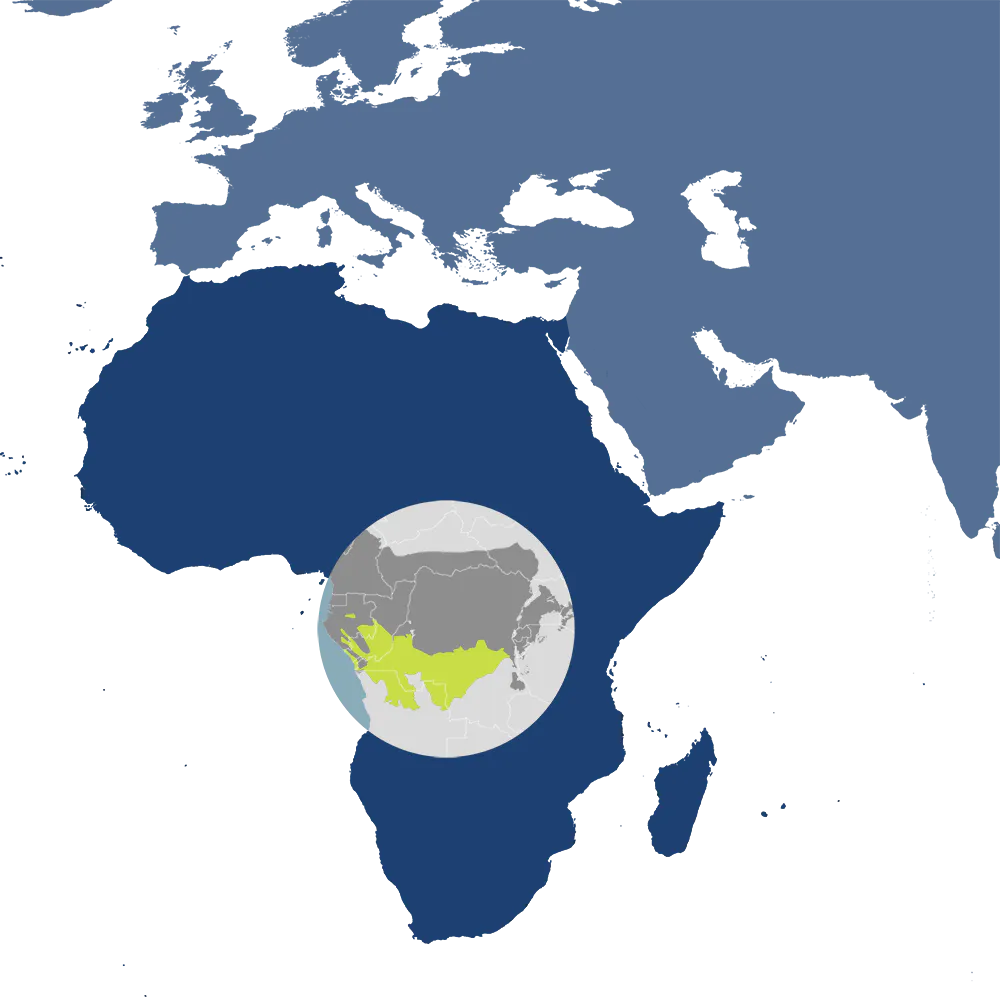
In the One Earth Bioregions Framework, the bongo is the iconic species of the South Congolian Forest-Savannas & Coastal Scarp bioregion (AT13), located in the Equatorial Afrotropics subrealm of the Afrotropics.
Life hidden within Africa’s dense tropical forests
Bongos inhabit tropical forests across Central, West, and parts of East Africa, favoring areas with thick undergrowth and abundant vegetation. They are found in countries including Cameroon, Gabon, the Democratic Republic of the Congo, and Kenya, where a distinct mountain subspecies survives in isolated highland forests.
These antelopes thrive in what ecologists call forest mosaics, landscapes shaped by natural disturbances such as fire, flooding, or elephant browsing that encourage fresh plant growth. They may also occupy bamboo forests and can range up to elevations of 4,000 meters (over 13,000 ft). Permanent water sources and dense vegetation are essential, providing both nourishment and cover in environments where visibility is limited and escape routes must be immediate.
Known by their stripes and spiraled horns
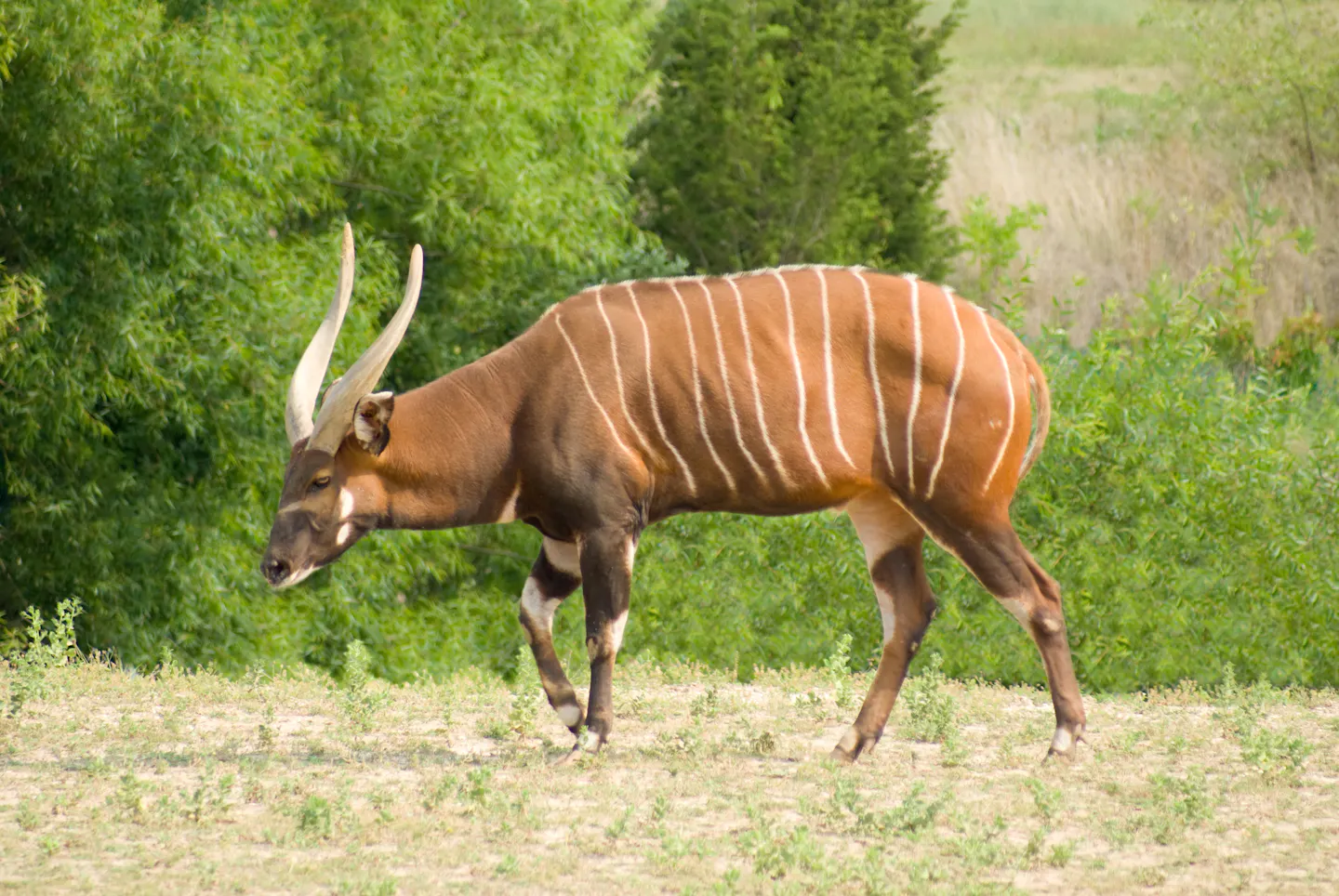
The bongo is the third-largest antelope in the world, with adults standing up to 1.3 meters (about 4.3 ft) at the shoulder and stretching more than three meters in length (about 10 ft). Its most defining feature is its rich reddish-brown coat, overlaid with 10 to 15 vertical white-yellow stripes that help break up its outline in the dappled forest light.
Both males and females bear heavy, slightly spiraled horns that sweep backward over their bodies, a rare trait among antelopes. These horns, which can reach nearly a meter in length (about 3.3 ft), are permanent structures made of keratin and are never shed.
Facial markings include a white chevron between the eyes and pale patches on the cheeks, while a ridge of darker hair runs along the spine. As males age, their coats deepen into a dark mahogany tone, contrasting with the brighter coloration of females.
A browser’s diet shaped by the forest
Bongos are herbivorous browsers, feeding on a wide variety of plant material including leaves, vines, bark, grasses, roots, and fruits. Their long, prehensile tongues allow them to grasp vegetation with precision, pulling food from dense foliage.
Minerals play an important role in their diet. Bongos regularly visit natural salt licks and have even been observed consuming burnt wood after storms, likely to supplement essential salts and nutrients.
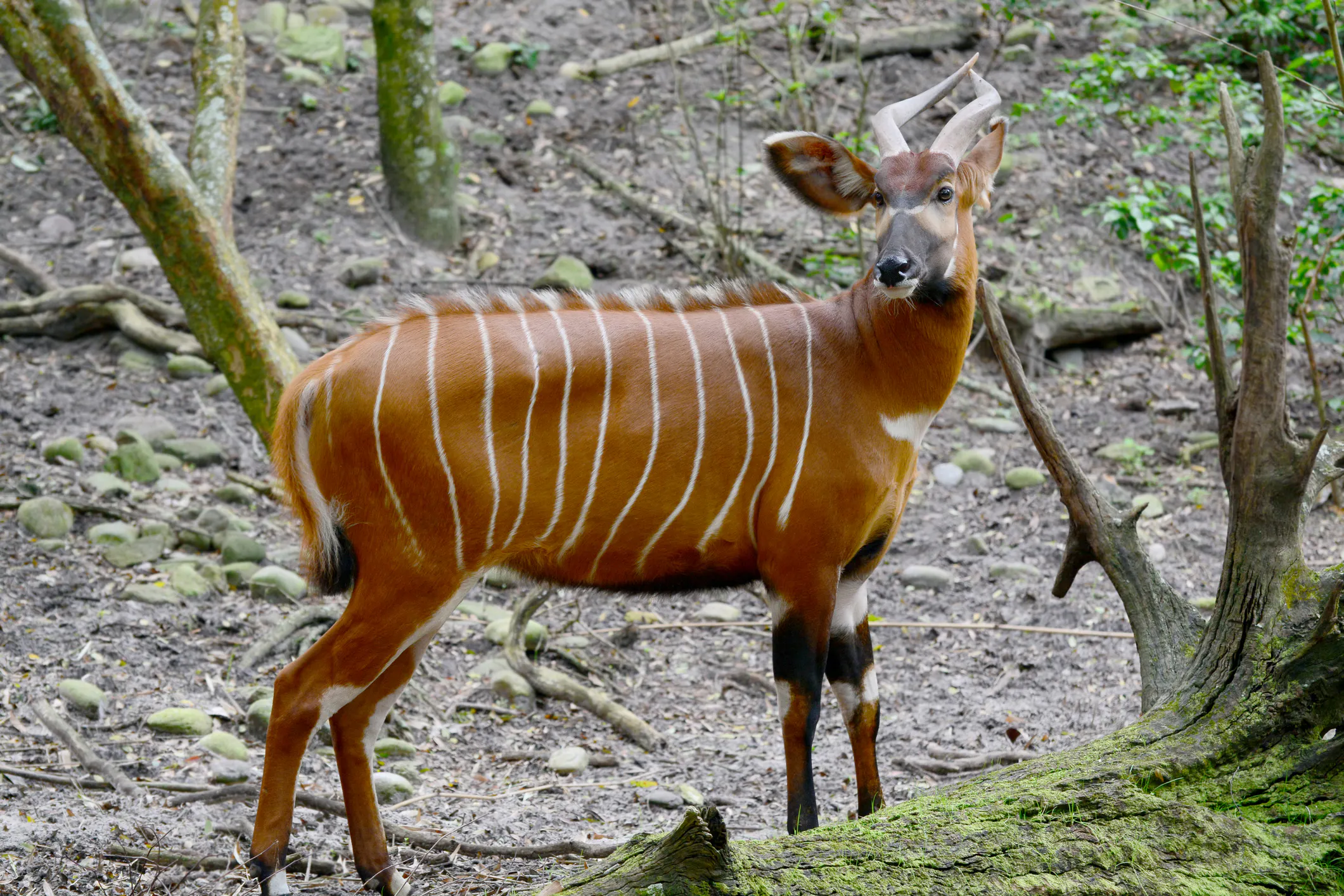
The bongo is among the largest of the African forest antelope species. Image Credit: © Gualberto Becerra P., Dreamstime.
A quiet but important role in the African ecosystem
As large herbivores, bongos help shape the structure and composition of forest vegetation. By feeding on a wide range of plants, they influence plant growth patterns and contribute to the regeneration of forest understory.
Their presence is also tied to the broader ecological network. Bongos serve as prey for predators such as leopards and spotted hyenas, while calves may fall victim to pythons. In this way, they are embedded in the balance of forest ecosystems, both shaping and sustaining biodiversity.
Elusive behavior in a world of shadows and sound
Bongos are primarily nocturnal, though they may also be active at dawn and dusk. They are shy and easily startled, relying on speed and agility to navigate dense vegetation. When fleeing, they flatten their horns along their backs, allowing them to move swiftly through tangled forest without obstruction.
Socially, their lives are structured but subtle. Adult males tend to live alone, while females form small groups of six to eight individuals with their young.
Communication is limited, consisting mainly of grunts, snorts, and a soft call between mothers and calves. When alarmed, a bongo may emit a bleat before disappearing into cover.
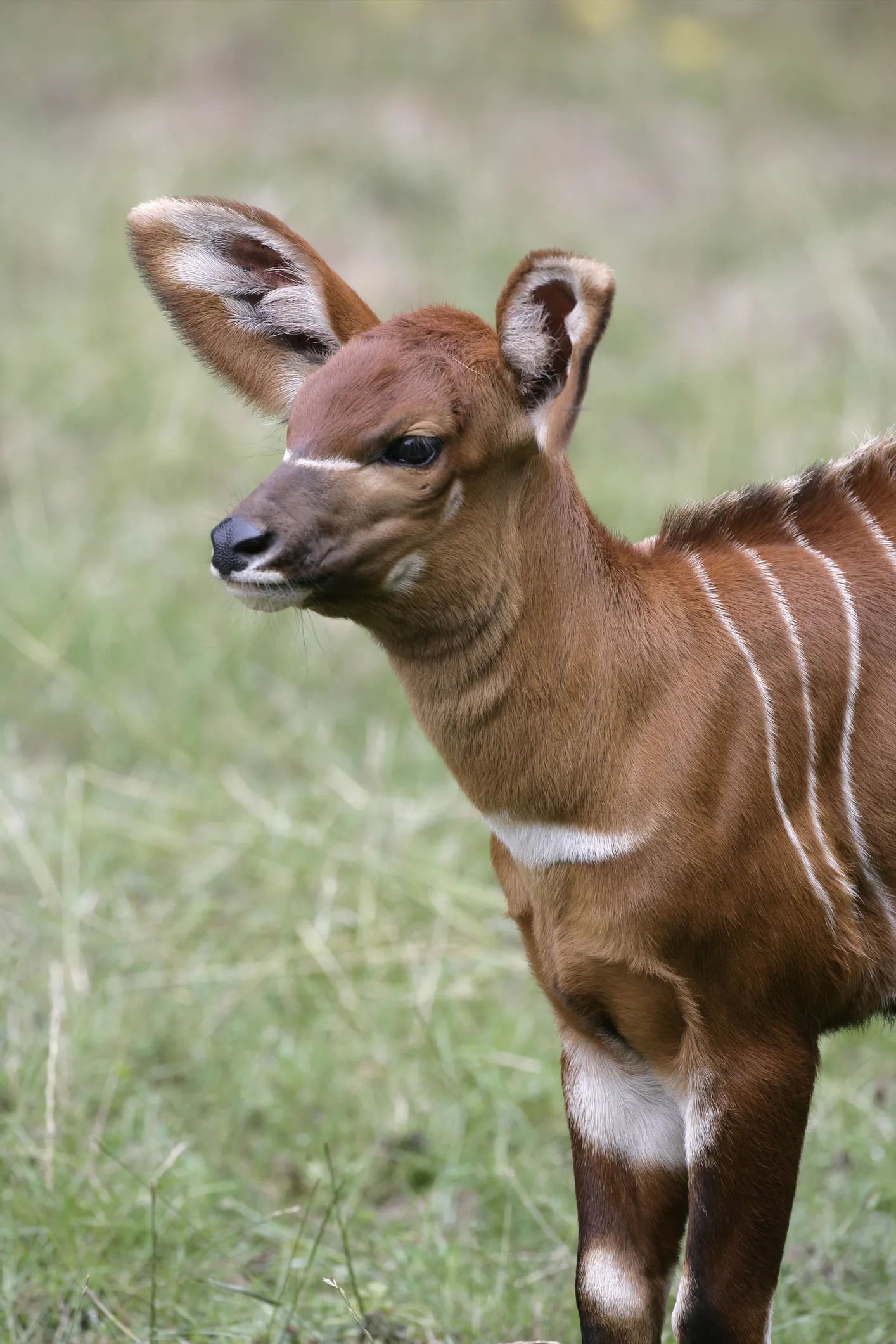
A young bongo who hasn't sprouted horns yet. Image Credit: © Mikelane45, Dreamstime.
A life cycle built on secrecy and rapid growth
After a gestation period of about 285 days, females give birth to a single calf. Newborns are hidden in dense vegetation for a week or more, visited only briefly by their mothers for nursing. This strategy reduces the risk of predation during the calf’s most vulnerable stage.
Calves grow quickly, joining nursery groups soon after and beginning to develop horns within a few months. They are weaned at around six months and reach sexual maturity between 20 and 27 months. In the wild, bongos can live up to 19 years.
A species under pressure from habitat loss and hunting
Across their range, bongo populations have declined due to habitat destruction, logging, and agricultural expansion. Hunting and poaching remain significant threats, as bongos are targeted for their meat, horns, and hides.
The mountain bongo of Kenya faces the most severe crisis. Once more widespread, it now survives only in a few isolated forest regions, with estimates suggesting as few as 140 individuals remain in the wild. Some populations have already disappeared entirely due to illegal hunting.
Conservation efforts racing against time
Despite these challenges, conservation efforts are underway. The Association of Zoos and Aquariums has established a Species Survival Plan to maintain genetic diversity in captive populations, while reintroduction programs have begun returning individuals to protected areas in Kenya.
Projects such as the Bongo Surveillance Programme use camera traps and DNA analysis to monitor remaining wild populations. At the same time, initiatives like the Mount Kenya Wildlife Conservancy are working to breed and reintroduce bongos, aiming to rebuild wild populations before it is too late.
A key focus is managing fragmented populations as a connected system, allowing genetic diversity to be preserved through strategic transfers between groups.
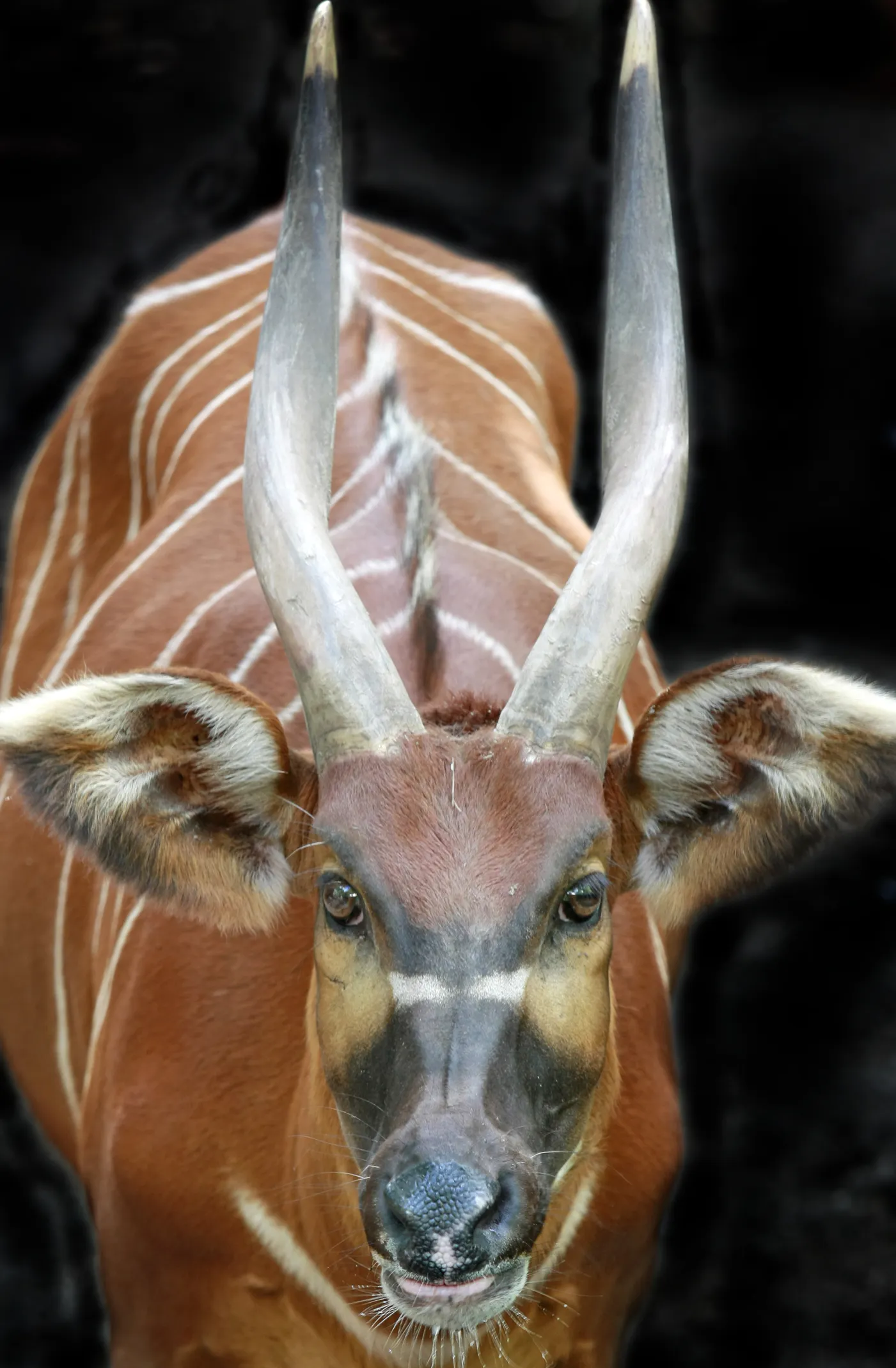
Close up view of the bongo's horns and stripes. Image Credit: © Gvision, Dreamstime.
Conservation status reflects a fragile future
The bongo as a species is currently listed as Near Threatened. However, this overall status masks a stark divide between subspecies. The western or lowland bongo remains relatively more widespread, though declining, while the eastern or mountain bongo is classified as Critically Endangered.
With small, isolated populations and ongoing threats, the future of the mountain bongo in the wild depends on immediate and effective conservation action.
A final glimpse of a disappearing forest icon
The bongo is a creature of quiet forests and fleeting encounters, its beauty revealed only to those patient enough to catch a glimpse. As its habitat shrinks and its numbers dwindle, the survival of this remarkable antelope depends on a delicate balance of protection, restoration, and human will. Whether it continues to move through Africa’s forests or fades into memory may depend on what happens next.
Explore similar content

Subscribe to receive monthly updates on climate solutions, environmental heroes, and the profound beauty and wonder of our shared planet Earth.
What is an Iconic Species?
An iconic species is a charismatic and ecologically significant animal selected to represent the unique biogeographical diversity of each bioregion in One Earth's Bioregions Framework. Learn more >