Meet the Chinese pangolin: One of Asia’s most threatened mammals
- Nature Conservation
- Land Conservation
- Iconic Species
- Wildlife
- Mammals
- Southeast Asian Forests
- Indomalaya Realm

In the shadowed forests of southern China and the northern reaches of the Indian subcontinent, a strange and gentle creature moves quietly through the night. Covered head to tail in overlapping keratin scales, the Chinese pangolin (Manis pentadactyla) looks almost prehistoric, like something that wandered out of an ancient fossil bed.
Yet this shy, ant-eating mammal is very much alive today, even as its numbers collapse around it. Pangolins have become some of the most heavily trafficked mammals in the world, and the Chinese pangolin’s story is a sobering reminder of how quickly a species can slide toward disappearance when human demand outpaces its ability to recover.

The Chinese pangolin is the iconic species of the South China Subtropical Evergreen & Monsoon Forests bioregion (IM13), located in the Southeast Asian Forests subrealm of Indomalaya.
A surprisingly wide range of habitats
Chinese pangolins are found in China, Nepal, Bhutan, India, Bangladesh, Myanmar, Laos, Vietnam, Thailand, and Taiwan. In some portions of this historic range, intense exploitation may already have eliminated local populations.
The landscapes they inhabit are remarkably varied. Chinese pangolins have been recorded in primary and secondary tropical forests, bamboo forests, limestone forests, broadleaf and coniferous forests, grasslands, and agricultural fields. They have been found at elevations of up to 3,000 meters (9,800 feet).
This flexibility means a Chinese pangolin might move through dense forest in one part of its range and forage near cultivated or human-modified landscapes in another. What these places must offer is access to the insects on which the species depends and ground suitable for the burrows it uses for feeding, shelter, and sleep.
An armored body built for digging and defense
At first glance, the Chinese pangolin can look almost reptilian. But beneath that armor is a mammal with a suite of physical traits highly specialized for its insect-based diet.
Pangolins are the only mammals covered in overlapping scales. Those scales are made of keratin, the same material found in human fingernails. Chinese pangolins can have 18 rows of overlapping scales, with hairs or bristles growing around their bases. Their scales can range from dark olive brown and yellow-brown to dark brown or dark gray.
Their head and body measure roughly 40 to 58 centimeters (16–23 in), with a tail about 25 to 38 centimeters (9.8–15 in) long. Adults can weigh between 2 and 7 kilograms (4.4–15.4 lb). Compared with other pangolin species, the Chinese pangolin has a relatively short tail, a thick body, especially large front claws, and prominent external ears. Males can be up to 30% heavier than females.
Those front claws are formidable digging tools. The animal's mouth, by contrast, is small and narrow. A long, sticky tongue does much of the work of collecting food.
Even the digestive system is specialized. The Chinese pangolin's stomach has two chambers. One stores food, while the other helps grind it using thick muscular walls, small keratinous spines, and stones or soil swallowed by the animal.
When threatened, the pangolin's scales become its shield. It curls tightly into a ball, protecting the softer parts of its body beneath layers of overlapping armor.
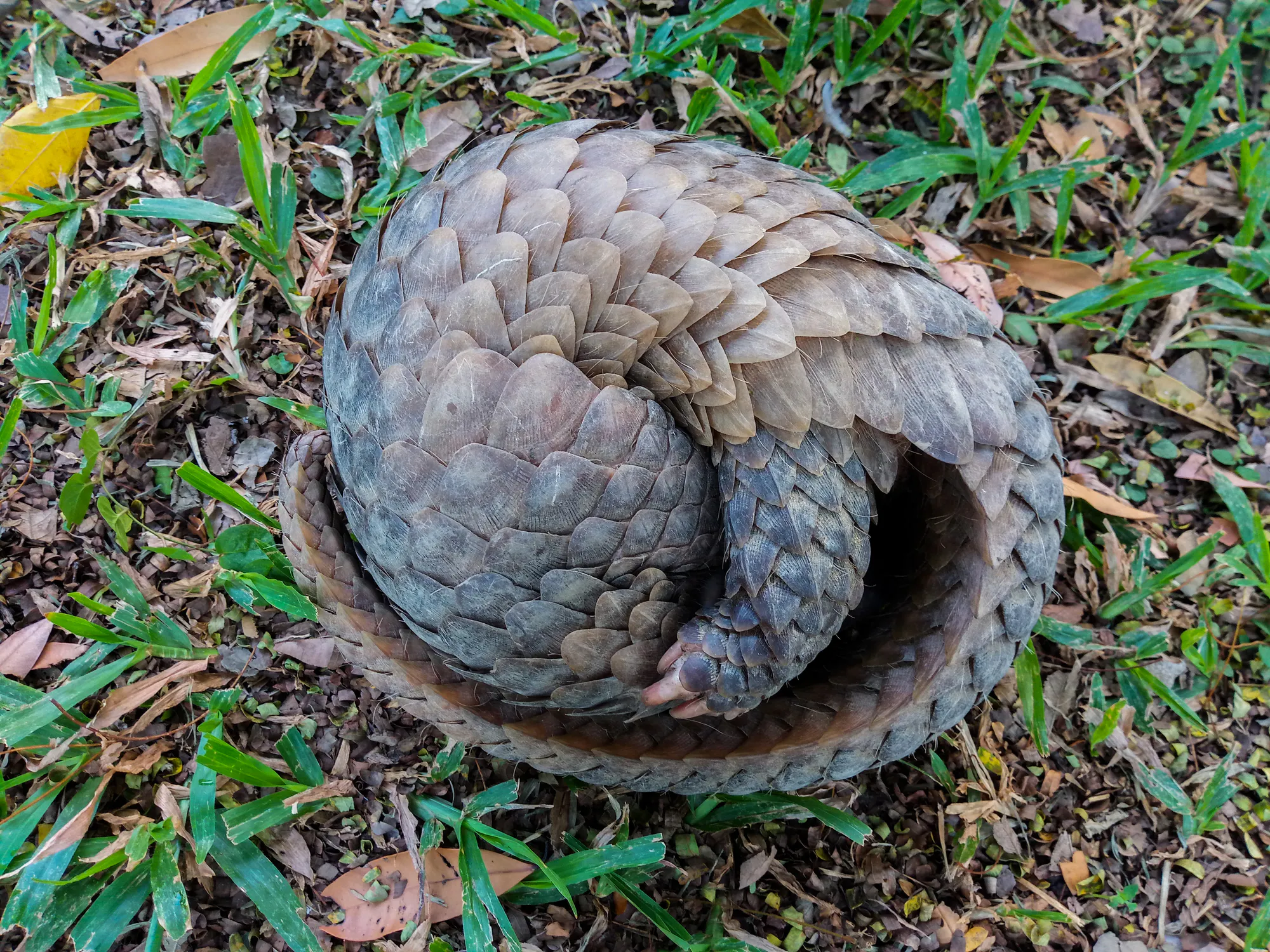
A Chinese pangolin lies rolled into ball on grass. Image Credit: © Ronnachai Limpakdeesavasd, Dreamstime.
A diet dominated by ants and termites
Chinese pangolins are insectivores, with ants and termites forming the core of their diet.
Using their powerful foreclaws, they break into ant nests and termite mounds before sweeping up the insects with their long, sticky tongues. Their feeding patterns can shift with the seasons. Research has found that Chinese pangolins feed primarily on ants during summer but favor termites in winter, likely in response to changes in prey availability.
One wild juvenile examined in Hong Kong offered a striking glimpse of how insect-heavy that diet can be. Its gut contained 25,803 ants and 812 termites representing several genera and species. In that individual, ants accounted for 97% of the insects by abundance and 98% by biomass.
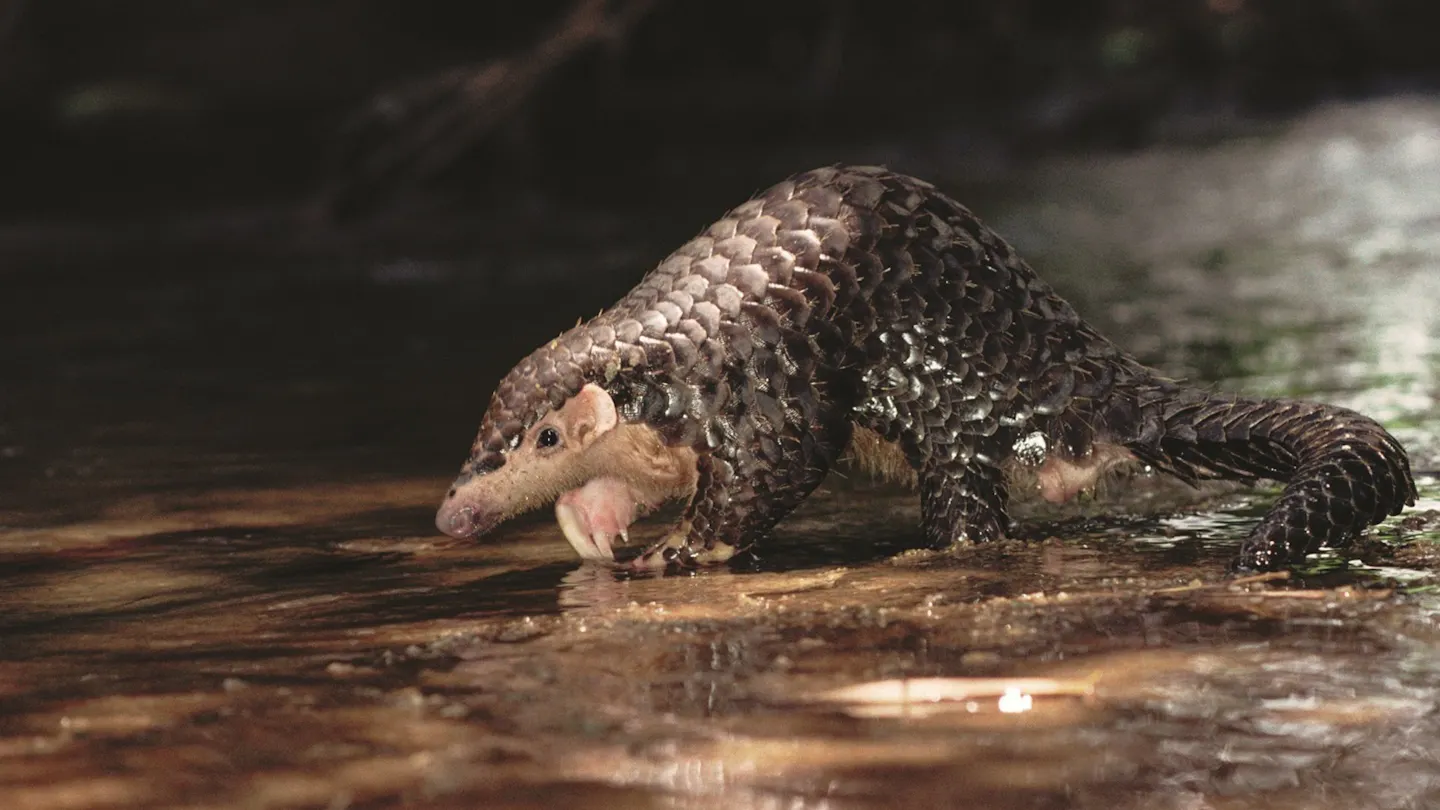
Chinese pangolins have even been observed using an unusual feeding strategy. Individuals have lain on the ground with their scales raised, allowing ants to crawl between them. The pangolin then closes its scales around the insects before entering water and reopening them, releasing the ants so they can be eaten as they float.
Life unfolds underground and after dark
Chinese pangolins are primarily solitary and nocturnal. They spend much of their time on the ground, although they can climb trees and are also capable swimmers.
Burrows are central to their daily lives. Researchers have identified two broad types. Feeding burrows are generally used only once while hunting, while resident burrows provide places to rest, sleep, and shelter. These resting sites are often concealed by vegetation, and pangolins appear to actively select where they establish them.
Their secretive habits are part of what makes the species difficult to study. Even today, researchers lack an accurate estimate of how many Chinese pangolins remain in the wild.
A single pangolin pup begins life under its mother's protection
Females are pregnant for around six to seven months and generally give birth to a single offspring, although twins occur rarely. In parts of China, births appear to be seasonal, occurring from August through February. Researchers still have much to learn about the species' reproductive biology and life history.
A newborn weighs roughly 93 grams (3.3 ounces) and measures about 45 centimeters (18 inches) in length. Its scales are initially soft but begin to harden after about two days.
A young pangolin can walk on its first day, but it also travels on its mother's back or tail. If danger appears, the female curls around her offspring, drawing the youngster against her belly and shielding it with her armored body. Young likely begin weaning at around five to six months and remain with their mother until they become independent.
There are even observations of males allowing a female and her young to share their burrow, a glimpse into a species whose social and reproductive lives remain only partly understood.
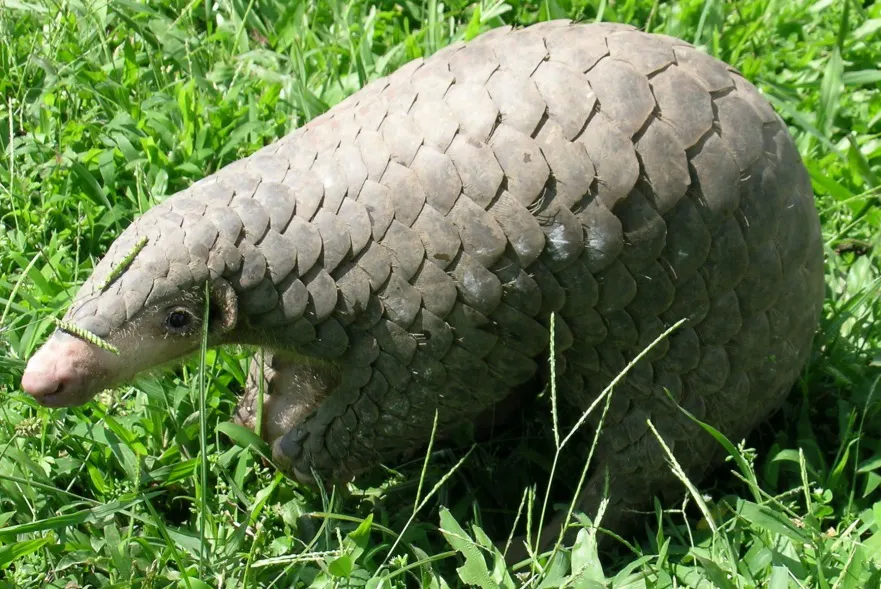
Chinese pangolin. Image Credit: Sarita Jnawali, National Trust for Nature Conservation.
Poaching and wildlife trafficking have driven a devastating decline
Poaching is the species' foremost threat. Pangolins have been hunted for meat and for their scales, which have been used as ingredients in traditional Chinese medicine.
The scale of exploitation has been enormous. During the 1960s, an estimated 170,000 to 180,000 Chinese pangolins were seized each year across the Chinese provinces of Fujian, Hunan, Guangxi, Guizhou, Yunnan, and Guangdong. Despite decades of legal protections, illegal trafficking has persisted.
The demand is especially devastating for a mammal that generally produces only one young at a time. Removing adults from the wild can eliminate not only breeding animals but, in the case of females with young, the next generation as well.
Today, the exact number of Chinese pangolins remaining is unknown. What is clear is that the population is still declining.
Critically Endangered but conservation efforts are expanding
The International Union for Conservation of Nature lists the Chinese pangolin as Critically Endangered. The species has held that designation since 2014 after an estimated decline of more than 80% over three generations, or approximately 21 years.
International trade protections have also strengthened. In 2016, CITES moved the Chinese pangolin to Appendix I, its highest level of protection for species threatened with extinction. That designation prohibits commercial international trade in wild-caught animals.
Individual countries have adopted their own protections over decades. India granted the species full protection in 1972, Nepal followed in 1973, and other range countries subsequently enacted legislation of their own. In 2020, China raised all pangolin species to its highest level of wildlife protection.
Conservationists are also trying to move beyond legislation alone. The IUCN SSC Pangolin Specialist Group has called for better population monitoring, DNA analysis, identification of important pangolin strongholds, increased patrols, public education, and strategies to reduce demand for pangolin meat and scales.
Community-based protection is another part of the response. Since 2017, the China Biodiversity Conservation and Green Development Foundation has established Chinese pangolin Community Conservation Areas in Hunan, Guangxi, and Jiangxi provinces. Other conservation organizations are working with communities living alongside pangolins, campaigning against wildlife trafficking, and supporting rescue and rehabilitation efforts.
There is evidence of public support for stronger protection as well. In a 2016 survey of 1,892 Chinese adults, more than 80% of respondents said they wanted pangolins protected.
A fragile future for an ancient survivor
The Chinese pangolin has outlasted millions of years of natural change, only to find its greatest threat in the demand of the modern world. Its story is not yet finished, and the growing patchwork of legal protections, conservation areas, and shifting public attitudes offers real reason for hope.
Whether that hope translates into recovery will depend on how quickly the pressure on this quiet, armored little mammal can be eased before it disappears from the forests it has called home for so long.
Explore similar content

Subscribe to receive monthly updates on climate solutions, environmental heroes, and the profound beauty and wonder of our shared planet Earth.
What is an Iconic Species?
One Earth’s Species of the Week series highlights charismatic and ecologically significant animals that represent the diversity of each of our 185 bioregions. These iconic species are part of the One Earth Bioregions Framework. Learn more >
.jpg?auto=compress%2Cformat&h=600&w=600)