Meet the Siberian tiger: The world’s largest cat roaming the Asia's snowy forests
- Nature Conservation
- Land Conservation
- Iconic Species
- Mammals
- Wildlife
- Northeast Asian Forests
- Eastern Eurasia Realm

One Earth’s “Species of the Week” series highlights an iconic species that represents the unique biogeography of each of the 185 bioregions of the Earth.
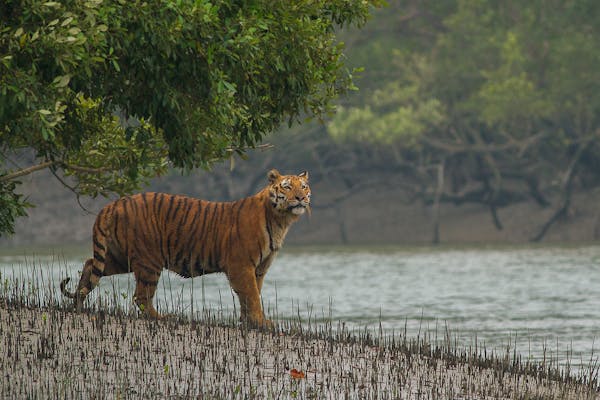
Deep within the vast coniferous forests of the Russian Far East and the snowy slopes of the Sikhote-Alin mountains, the Siberian tiger, also known as the Amur tiger, rules as the top predator in one of Earth’s coldest tiger habitats.
These remote territories stretch nearly 1,000 kilometers and include rugged valleys, frozen rivers, and a mosaic of Korean pine and mixed boreal forests. Once ranging across the Korean Peninsula and northeast China, today’s Siberian tiger survives primarily in fragmented pockets of Russia and China, with occasional sightings near North Korea.

In the One Earth Bioregions Framework, Siberian tigers are the iconic species of the Manchuria-Ussuri Mixed Forests & Meadow Steppes bioregion (PA46), located in the Northeast Asian Forests subrealm of Eastern Eurasia.
Siberian tigers are the largest of all wild cats
The Siberian tiger (Panthera tigris altaica) is the largest subspecies of tiger, with males averaging 195 centimeters (77 in) in body length and weighing around 176 kilograms (389 lb). Exceptional individuals have measured over 3 meters in length and weighed more than 300 kilograms (660 lb). Females are smaller, averaging 174 centimeters (69 in) in length and 117.9 kilograms (260 lb) in weight.
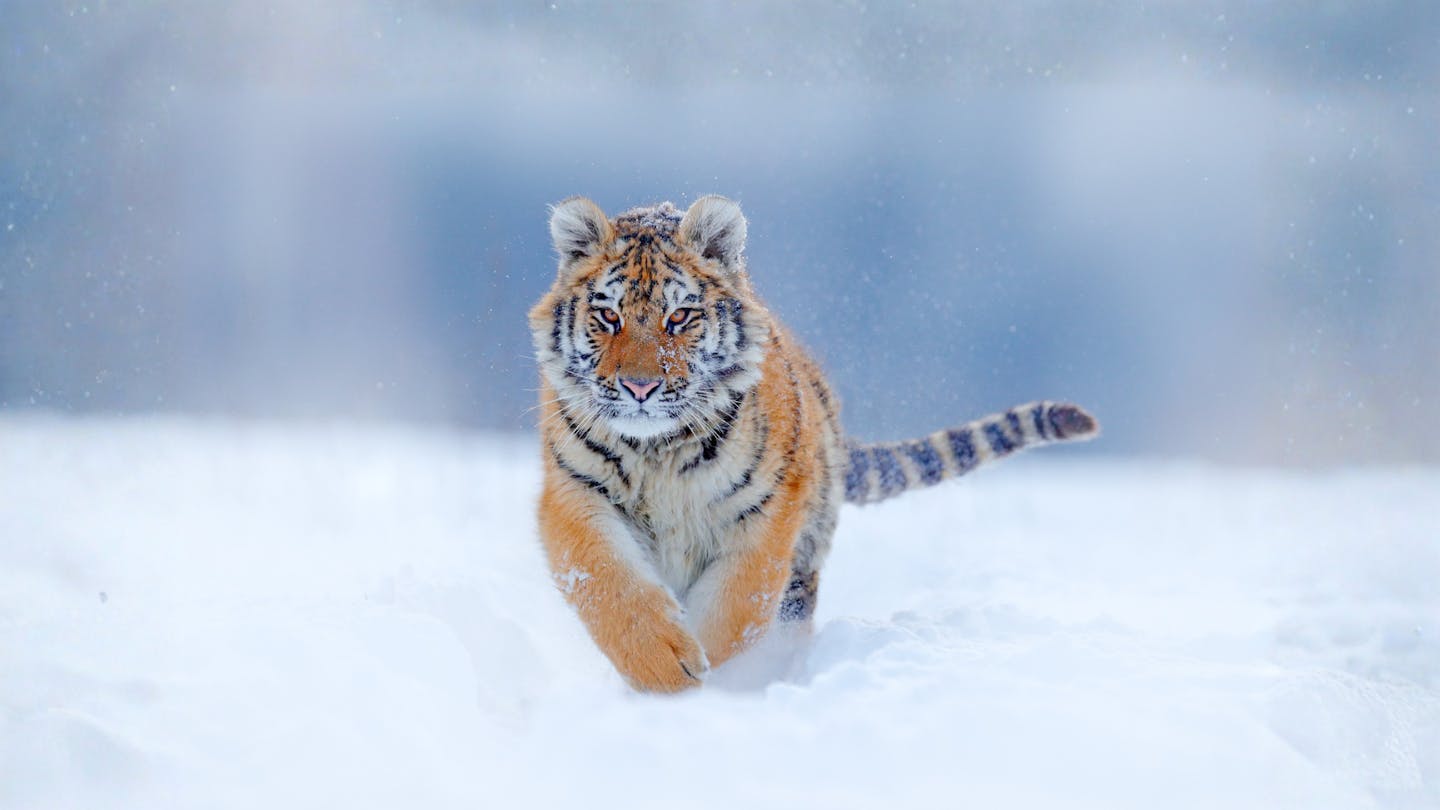
Their thick, pale orange fur, with sparse dark stripes and a shaggy winter coat, helps them survive the region’s harsh winters. They also grow longer manes and whiskers compared to their southern cousins, with winter fur reaching up to 110 millimeters (4.3 in) on the neck and 105 millimeters (4.1 in) on the belly.
Apex predators that feed on deer, boar, and even bears
Siberian tigers are opportunistic hunters. Their primary prey includes Manchurian wapiti, wild boar, sika deer, roe deer, musk deer, and moose. They have even been known to hunt Asiatic black bears and brown bears, targeting cubs or adults during hibernation.
Smaller prey like hares, pikas, and salmon also supplement their diet. Tigers can consume up to 27 kilograms (60 lb) of meat in a single meal and may kill once every 5 to 7 days depending on the season.
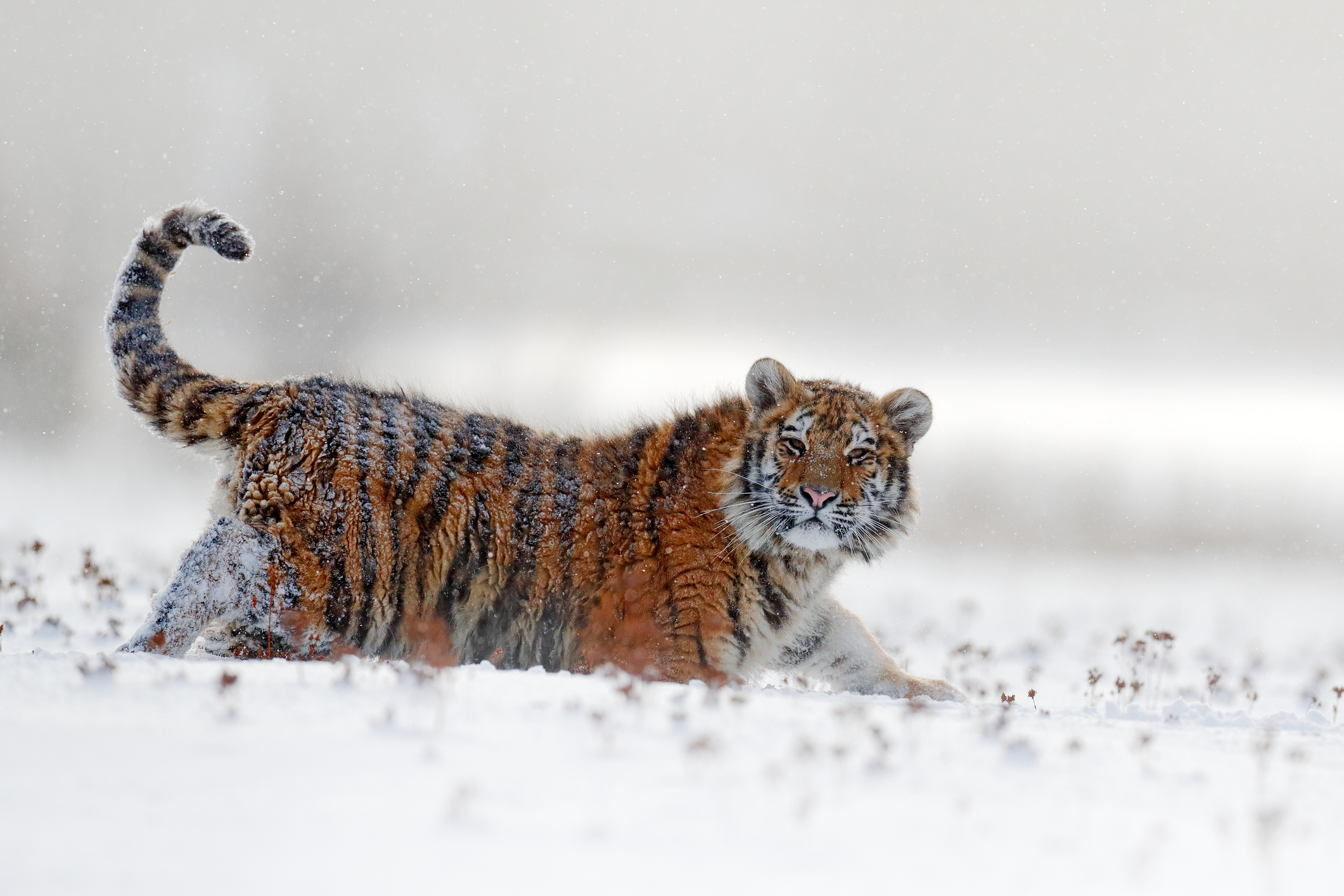
A Siberian tiger in snow fall. Image Credit: © Ondrej Prosicky, Dreamstime.
Tigers shape the ecosystem through predation and competition
As top predators, Siberian tigers play a crucial role in maintaining balance in their ecosystem by regulating prey populations. They also compete with other large carnivores such as Amur leopards, Eurasian lynx, and bears.
Tigers suppress wolf populations in overlapping territories, effectively excluding them from some areas. Brown bears may occasionally kill tigers to steal prey, but in most direct encounters, it is the tiger that prevails. These predator dynamics influence everything from prey distribution to forest health.
Siberian tigers are solitary and highly territorial
Each Siberian tiger commands a territory of hundreds of square kilometers. They are solitary by nature, using scent markings to signal their presence and avoid conflict.
Females may overlap ranges with their daughters, especially in well-protected areas like Sikhote-Alin Biosphere Reserve. Population density in these remote regions is low, averaging less than one tiger per 100 square kilometers, but increases where prey and protection are abundant.
Cubs stay with their mothers for years
Siberian tigers can breed year-round, though most births occur in spring. After a 3 to 3.5-month gestation, a tigress gives birth to 2 to 6 blind cubs in a hidden den. Cubs stay with their mother for up to three years, learning to hunt and survive.
Females tend to stay closer to their natal territory, while males roam farther and face higher risks from poaching and territorial disputes. Tigers reach sexual maturity between 4 and 5 years old, and can live up to 18 years in the wild, or over 20 in captivity.
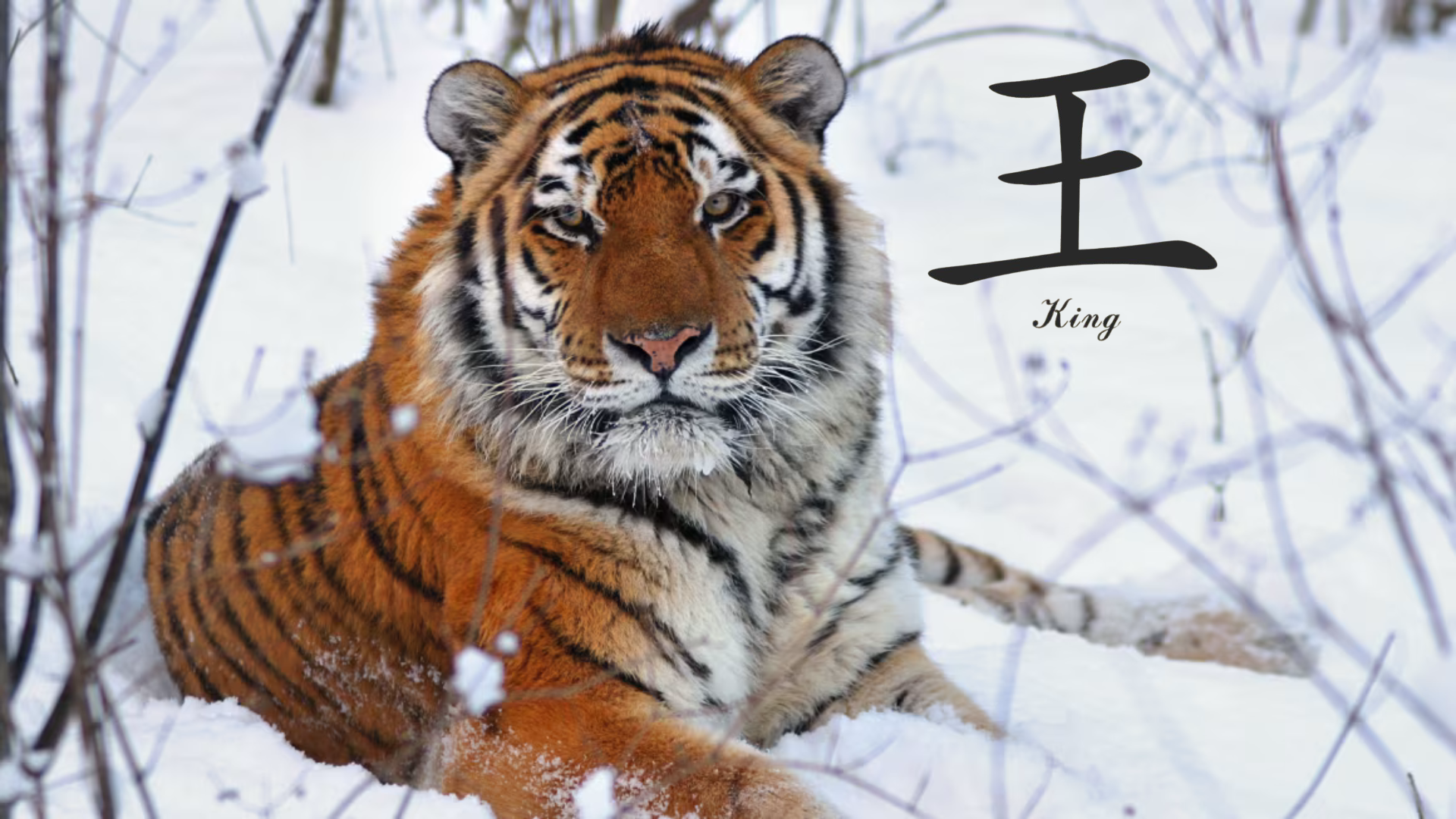
The Chinese character for “king" resembles the Siberian tiger's forehead markings. Image Credit: John Goodrich, WCS.
Indigenous cultures revered the tiger as a spiritual being
Among the Tungusic peoples of the Russian Far East, the Siberian tiger was considered a near-deity. The Udege and Nanai referred to it as “Amba,” or “Grandfather,” while the Manchu called it Hu Lin, the king.
The tiger’s forehead markings resemble the Chinese character for “king,” giving it revered status in Chinese and Korean cultures alike. For centuries, this majestic predator has symbolized power, courage, and a deep connection to nature in Northeast Asian folklore.
Poaching and habitat loss continue to threaten survival
Despite growing populations, the Siberian tiger remains Endangered. Genetic studies reveal alarmingly low diversity, suggesting a past population bottleneck and ongoing isolation. Poaching of tigers and their prey, illegal logging, and habitat fragmentation continue to challenge conservation efforts. Development corridors prevent tigers from traveling between subpopulations, further isolating them and increasing vulnerability to disease and climate shifts.
Conservation efforts offer hope
Thanks to decades of protection, the Siberian tiger population has increased from just a few hundred in the 1990s to around 750 individuals today, including approximately 200 cubs. Projects like the Siberian Tiger Project use radio collars to track tigers, study behavior, and respond to human-tiger conflicts.
Cross-border collaboration between Russia and China has also improved habitat connectivity and anti-poaching enforcement. Captive breeding programs have created genetic reserves, and rewilding projects, while controversial, are under consideration in Central Asia.
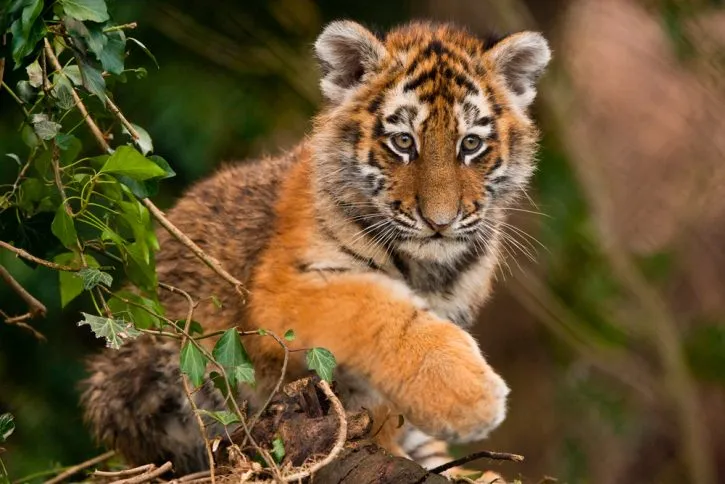
A Siberian tiger cub. Image Credit: Mark Malkinson Photography, iStock.
Their future depends on global protection and local stewardship
The story of the Siberian tiger is one of both loss and resilience. Once nearly eradicated, this apex predator has made a remarkable comeback through determined international cooperation.
Yet its future remains uncertain, and continued conservation will require habitat protection, genetic diversity, and coexistence with local communities. The fate of the world’s largest wild cat is in our hands and in the forests it calls home.
Explore similar content

Subscribe to receive monthly updates on climate solutions, environmental heroes, and the profound beauty and wonder of our shared planet Earth.
What is an Iconic Species?
An iconic species is a charismatic and ecologically significant animal selected to represent the unique biogeographical diversity of each bioregion in One Earth's Bioregions Framework. Learn more >