Mapping South Korea's birdlife, one observation at a time
- Nature Conservation
- Biodiversity
- Science & Intelligence
- Birds
- Northeast Asian Forests
- Eastern Eurasia Realm

A map that sparks curiosity
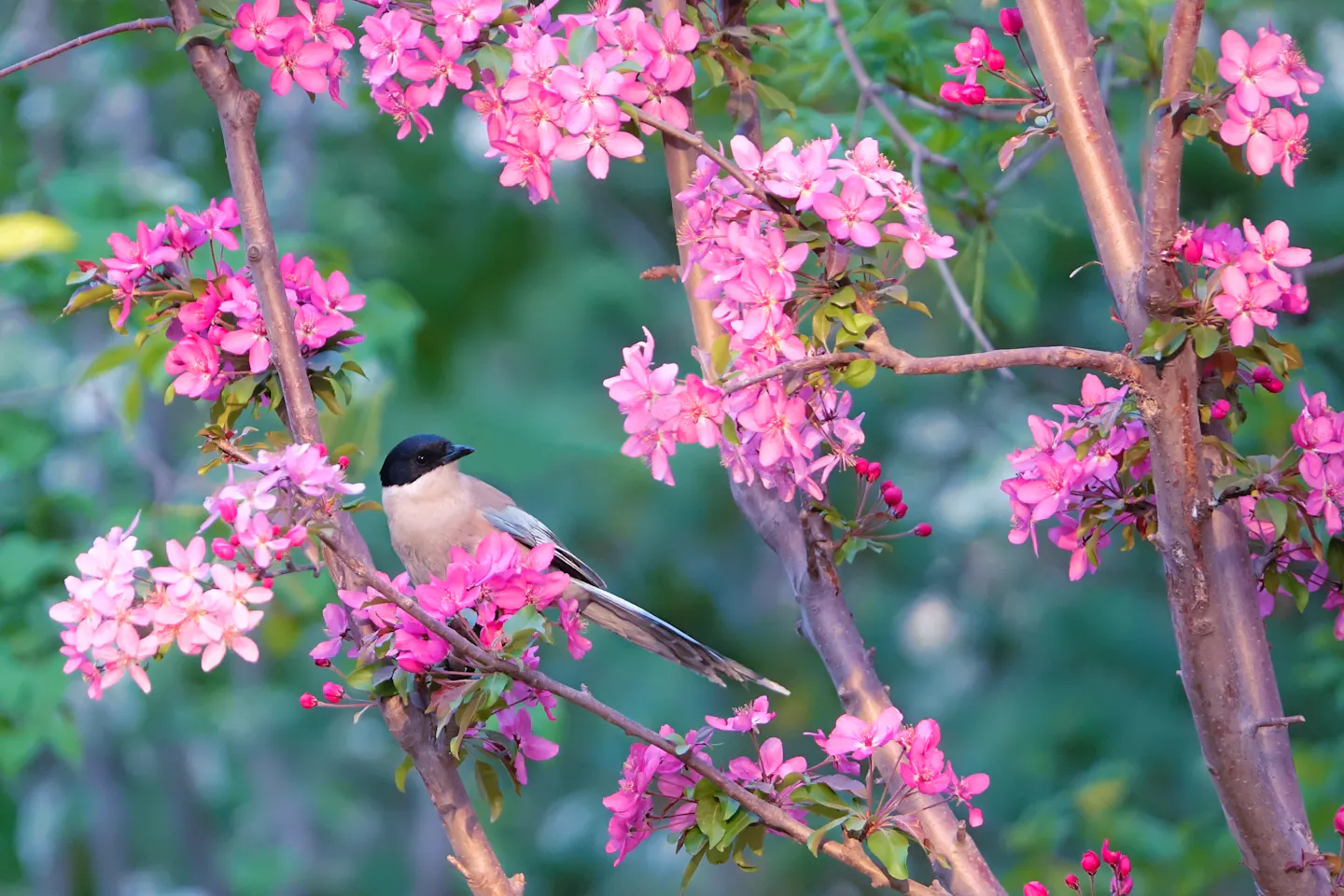
Picture a bird you hope to see on a visit to South Korea: perhaps a magpie near a city park, or a seasonal visitor along a coastal wetland. You open a map and discover that the species has been documented in a particular part of the country. Suddenly, a name in a field guide has become a place worth learning about.
That moment of curiosity is what I hope to make easier through KoreAves, a free, English-first and Korean-supported atlas I developed independently. Rather than asking readers to accept a colored map as the whole story, the website provides a path from a bird's name to the public records, source links, and explanations that give the map meaning.
Finding South Korea's birds and their sources
South Korea's birdlife spans year-round residents and seasonal migrants. For someone who does not read Korean-language references, finding the relevant names, regional records, and original data sources can be difficult even before a field trip begins.
KoreAves organizes a South Korean checklist of 597 species and 20 subspecies—617 taxonomic entries in total. They are not 617 separate species, and not every entry has a complete set of mapped records or suitable licensed photographs. Making that distinction clear helps readers know what the atlas covers.
A visitor can choose a bird, explore which of South Korea's 17 first-level administrative regions contain eligible documented evidence, and follow linked sources to understand what contributed to the display. Species reference pages and a taxon comparison view offer additional ways to explore names and related information.
For example, the GIS explorer shows public evidence coverage for the Azure-winged Magpie. The regional map can start a question—Where has it been documented in the available sources?—and the source information beside it lets readers look more closely.
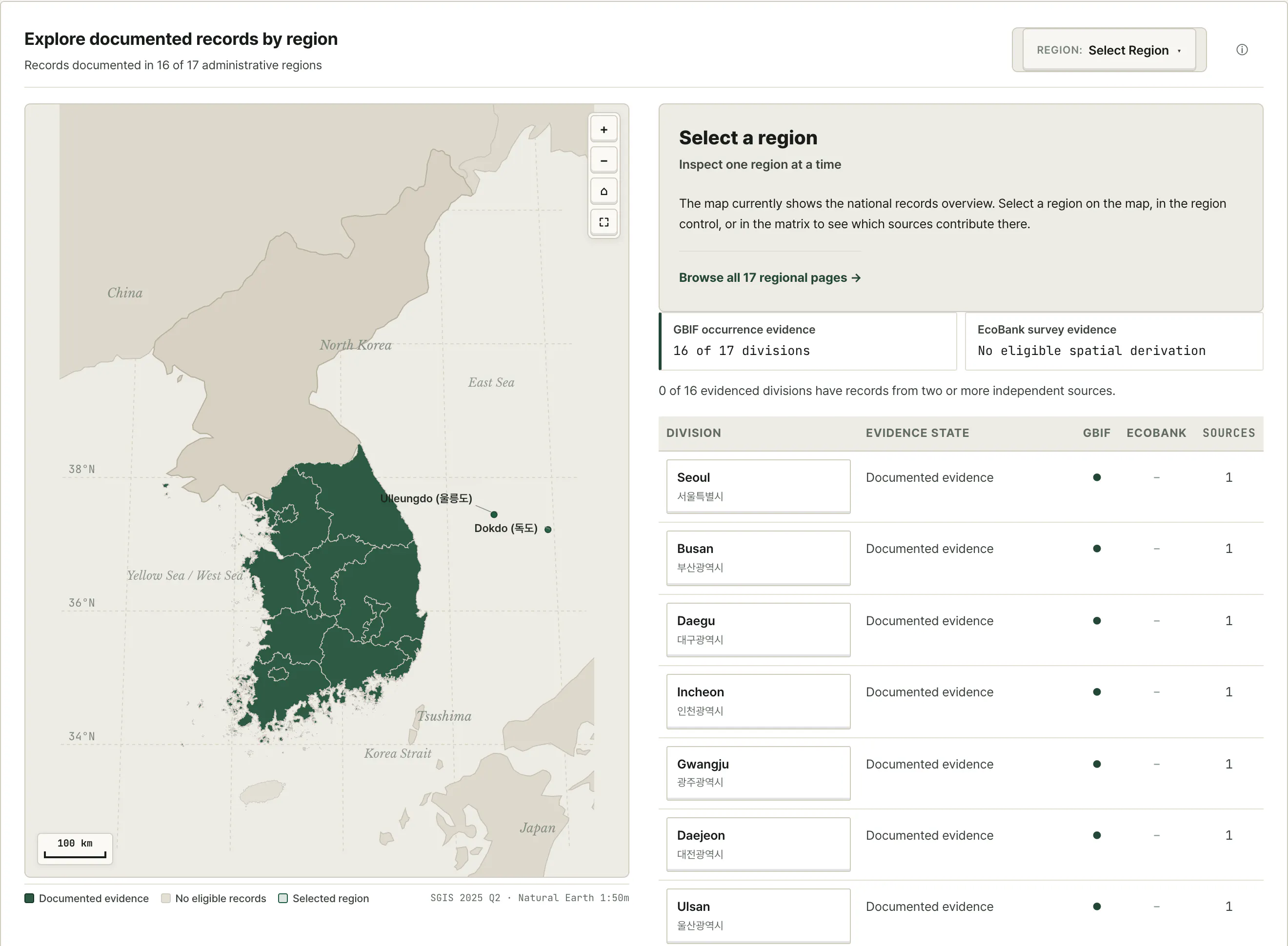
KoreAves' regional evidence explorer for the Azure-winged Magpie. Highlighted areas indicate eligible documented evidence within administrative regions. Image Credit: Jihun Oh , KoreAves.
Three questions make a bird map more useful
A map becomes more useful when it helps us ask better questions about what we are seeing.
Who recorded it, and when? A historical observation is still worth exploring, but it does not necessarily describe present-day conditions. Following its source and date matters.
What does a highlighted region represent? The number of observation records is not the number of individual birds. Multiple observers, repeat sightings, uneven survey effort, and the broad scale of administrative regions can all affect interpretation.
What might be missing? An area without eligible public records is not proof that a species is absent. Likewise, names and subspecies treatments sometimes differ across sources. KoreAves makes those gaps and reconciliations visible rather than quietly replacing them with certainty.
These are not reasons to avoid biodiversity maps. They are reasons to explore them more thoughtfully—and to value the work of birders, researchers, local organizations, and citizen observers who make source records possible.
An invitation to keep exploring
I began KoreAves with a question from my work as an independent software developer: could a public-facing digital tool make South Korea's bird information more approachable without losing the context that gives the evidence its value?
The atlas is one attempt at an answer. It brings familiar exploration tools—maps, species references, and comparisons—closer to the underlying documentation. It is not a field survey or a population estimate, and it cannot tell a visitor where a bird will appear next weekend. Local experts and original observation sources remain essential.
For curious readers, though, following one record can lead to a name, a region, a source, and a more interesting question about the natural world. That is a meaningful place to begin.
Explore similar content

Subscribe to receive monthly updates on climate solutions, environmental heroes, and the profound beauty and wonder of our shared planet Earth.